
tespro consultants

Concrete Quality Testing

5-rebar-detailing-mistakes-the-cause-crackes

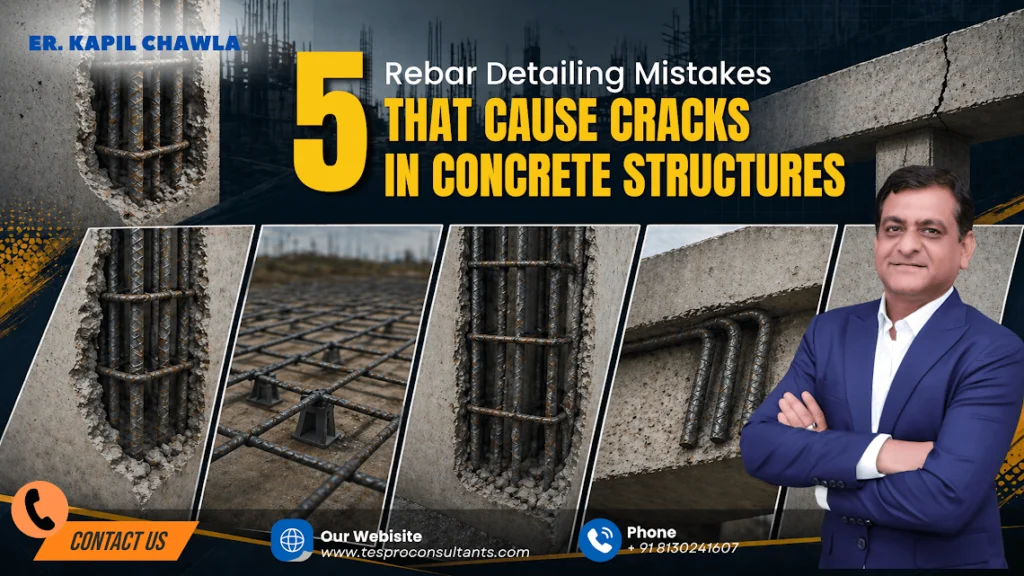
5 Rebar Detailing Mistakes That Cause Cracks in Concrete Structures 

Cracks in concrete structures are a common issue on construction sites, but solving them requires the right engineering approach. Experienced engineers understand that structural cracks in concrete are not only related to material strength or load conditions, but also to how reinforcement is detailed and executed on site. When steel placement, spacing, and anchorage are handled correctly, stress gets distributed properly and cracking is controlled. That is why understanding the real causes of cracks in concrete is important for long-term durability. Along with that, proper concrete quality testing and a concrete strength test on site help engineers ensure that the structure performs safely over time. Importance of Proper Rebar Detailing in Crack Control Proper rebar detailing helps control cracking and improves overall structural behaviour. Mistake #1: Insufficient Concrete Cover This is one of the key causes of cracks in concrete. Solution:Experienced engineers always ensure proper cover as per standards. Even with strong concrete strength testing, correct cover is essential for performance. Mistake #2: Incorrect Bar Spacing and Congestion Improper spacing leads to weak zones and increases cracks in concrete structures. Solution:Engineers plan spacing based on bar size and aggregate, which supports better concrete quality testing results. Mistake #3: Improper Anchorage Length and Development Length This mistake directly affects load transfer and leads to structural cracks in concrete. Solution:Engineers follow standard guidelines to maintain proper development length and structural stability. Mistake #4: Poor Lapping Practices Wrong lapping is a hidden but serious reason behind cracks in concrete structures. Solution:Even after a concrete strength test on site, engineers ensure proper lapping for long-term durability. Mistake #5: Ignoring Temperature and Shrinkage Reinforcement This leads to early-stage structural cracks in concrete, especially in slabs. Solution:Engineers include minimum reinforcement as per standards to handle temperature and shrinkage effects. Site Execution vs Design Intent Many causes of cracks in concrete come from execution errors, not design. Best Practices: Expert Insight Cracks in concrete structures are not always due to weak materials. In many cases, they are caused by detailing mistakes and poor execution. Engineers must focus on detailing as much as design. Along with that, proper concrete quality testing and regular concrete strength testing are important for long-term performance. For expert guidance in structural inspection and testing, connect with Er. Kapil Chawla of TESPRO Consultants. With strong practical experience, TESPRO helps identify real site issues and ensures safer, crack-resistant structures. Explore more: If planning to build your dream home?Check out Eternal Foundations—a helpful guide to building a strong, safe home that lasts for generations.📩 For a free e-book, email me at kapil.chawla@tesproconsultants.com


7-situations-core-cuttings-test

7 Situations When the Core Cutting Test in Concrete Becomes Necessary

The core cutting test in concrete is used when engineers need to know the real strength of concrete inside a structure, not just on the surface. In this method, a small cylindrical sample is taken from the hardened concrete and tested in a lab. This helps in getting accurate and practical data about the structure’s condition. While NDT in concrete methods like rebound hammer or ultrasonic tests are useful for quick checks, they may not always give exact strength values. Because of that, engineers rely on the concrete core test method when there is any doubt about safety or performance. Why the Core Cutting Test is Important in Structural Engineering 5 Situations When the Core Cutting Test in Concrete Becomes Necessary This test is mainly required when there is doubt about strength, visible damage, or when exact data is needed before taking important engineering decisions. 1. When Concrete Cube Test Results Are Doubtful 2. During the Structural Audit of Existing Buildings 3. Before Renovation or Structural Modification 4. In Case of Structural Failure or Collapse Investigation 5. For Compliance with Safety and Quality Standards Procedure of Core Cutting Test (Step-by-Step) Advantages of the Core Cutting Test in Concrete For reliable testing and expert guidance, Er. Kapil Chawla of TESPRO Consultants is a trusted professional in the field. With strong practical knowledge and experience in the core cutting test in concrete, he ensures accurate testing, clear reporting, and safe solutions for all types of structural projects. Explore more: If planning to build your dream home?Check out Eternal Foundations—a helpful guide to building a strong, safe home that lasts for generations.📩 For a free e-book, email me at kapil.chawla@tesproconsultants.com

6 Concrete Strength Testing Methods to Ensure Concrete Quality on Site

Concrete is one of the most commonly used materials in construction all over the world. Because of that, checking its quality and strength becomes very important for the safety and long life of any structure. On-site testing helps engineers understand whether the concrete is performing as expected or not. So, concrete strength testing methods are used to check the condition and reliability of concrete during construction. Here, we will look at six simple and widely used methods that help in checking concrete strength and quality directly at the site. Understanding Concrete Strength Basics 6 Concrete Strength Testing Methods There are several methods to test concrete strength, each offering unique advantages. Let’s look at six of the most commonly used concrete strength testing methods. Choosing the Right Testing Method on Site Choosing the correct concrete strength testing methodsis crucial for accurate results and ensuring the safety and reliability of a structure. Each method has its strengths, so it’s essential to choose the one that aligns with your project requirements. Factors like the age of the concrete, the nature of the structure, and the level of accuracy needed should guide your decision. For more information on how to calculate concrete compressive strength and expert guidance on concrete quality testing, and concrete strength methods, contact Er. Kapil Chawla of TESPRO Consultants. With years of experience in the field, provides professional advice to ensure your construction projects meet the highest quality standards. Explore more: If planning to build your dream home?Check out Eternal Foundations—a helpful guide to building a strong, safe home that lasts for generations. 📩 For a free e-book, email me at kapil.chawla@tesproconsultants.com