
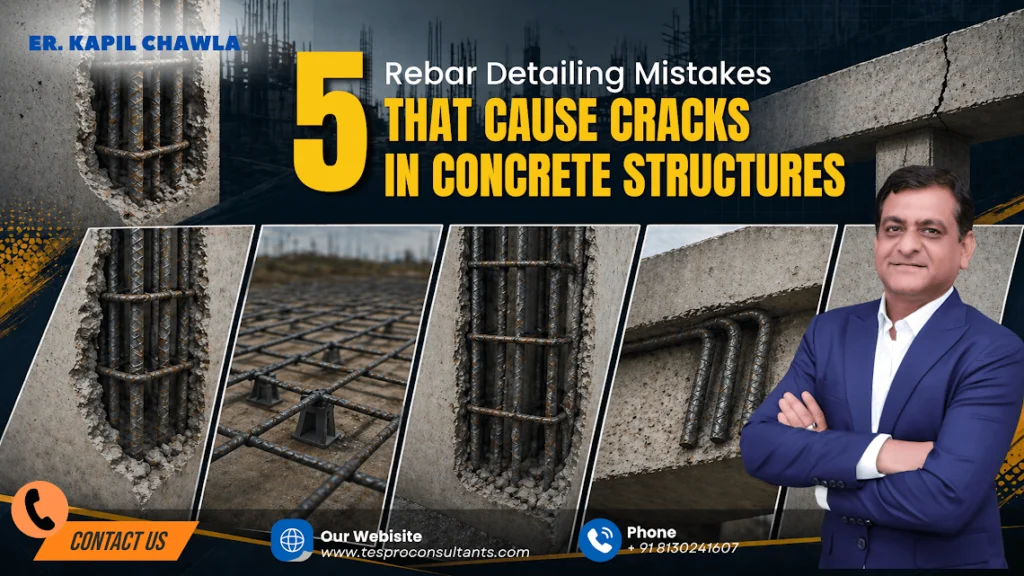
Cracks in concrete structures are a common issue on construction sites, but solving them requires the right engineering approach. Experienced engineers understand that structural cracks in concrete are not only related to material strength or load conditions, but also to how reinforcement is detailed and executed on site. When steel placement, spacing, and anchorage are handled correctly, stress gets distributed properly and cracking is controlled. That is why understanding the real causes of cracks in concrete is important for long-term durability. Along with that, proper concrete quality testing and a concrete strength test on site help engineers ensure that the structure performs safely over time.
Importance of Proper Rebar Detailing in Crack Control
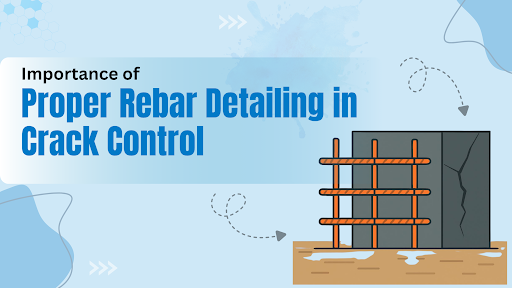
Proper rebar detailing helps control cracking and improves overall structural behaviour.
- Stress flow → Smooth load transfer inside the structure
- Crack control → Limits crack width and spread
- Bond strength → Better grip between steel and concrete
- Durability → Reduces corrosion chances
- Thermal control → Handles temperature changes
- Shrinkage control → Controls drying cracks
Mistake #1: Insufficient Concrete Cover
This is one of the key causes of cracks in concrete.
- Low cover → steel gets exposed to moisture and air easily
- Corrosion starts → steel begins to rust and expand inside concrete
- Expansion → leads to surface cracks and later spalling of concrete
- Wrong cover blocks were used on the site without proper checking
- Bars shift during pouring due to poor fixing and support
Solution:
Experienced engineers always ensure proper cover as per standards. Even with strong concrete strength testing, correct cover is essential for performance.
Mistake #2: Incorrect Bar Spacing and Congestion
Improper spacing leads to weak zones and increases cracks in concrete structures.
- Tight spacing → no proper concrete flow
- Congestion → honeycombing risk
- Air gaps → reduced strength
- Poor vibration → uneven compaction
- Beam-column joints → most affected
Solution:
Engineers plan spacing based on bar size and aggregate, which supports better concrete quality testing results.
Mistake #3: Improper Anchorage Length and Development Length
This mistake directly affects load transfer and leads to structural cracks in concrete.
- Short anchorage length → bars may slip under load
- No proper hooks → weak bond between steel and concrete
- High stress zones → cracks develop near supports and joints
- Wrong calculation → unsafe structural performance and risk of failure
Solution:
Engineers follow standard guidelines to maintain proper development length and structural stability.
Mistake #4: Poor Lapping Practices
Wrong lapping is a hidden but serious reason behind cracks in concrete structures.
- Same location laps → stress concentration
- Laps in critical zones → crack formation
- Short lap length → poor force transfer
- No staggering → continuous weak line
Solution:
Even after a concrete strength test on site, engineers ensure proper lapping for long-term durability.
Mistake #5: Ignoring Temperature and Shrinkage Reinforcement
This leads to early-stage structural cracks in concrete, especially in slabs.
- No distribution steel → surface cracks
- Temperature variation → expansion and contraction
- Drying shrinkage → random cracks
- Large slabs → higher risk
Solution:
Engineers include minimum reinforcement as per standards to handle temperature and shrinkage effects.
Site Execution vs Design Intent
Many causes of cracks in concrete come from execution errors, not design.
- Correct design → wrong site placement
- Bars misplaced → load path disturbed
- No checking → errors remain
- Poor supervision → higher risk
Best Practices:
- Pre-pour inspection before concreting
- Check the BBS carefully with the drawings
- Ensure proper supervision on site
- Match reinforcement with structural drawings
- Identify and fix errors before pouring
- Maintain correct bar placement and alignment
Expert Insight
Cracks in concrete structures are not always due to weak materials. In many cases, they are caused by detailing mistakes and poor execution. Engineers must focus on detailing as much as design. Along with that, proper concrete quality testing and regular concrete strength testing are important for long-term performance.
For expert guidance in structural inspection and testing, connect with Er. Kapil Chawla of TESPRO Consultants. With strong practical experience, TESPRO helps identify real site issues and ensures safer, crack-resistant structures.
Explore more: If planning to build your dream home?
Check out Eternal Foundations—a helpful guide to building a strong, safe home that lasts for generations.📩 For a free e-book, email me at kapil.chawla@tesproconsultants.com