
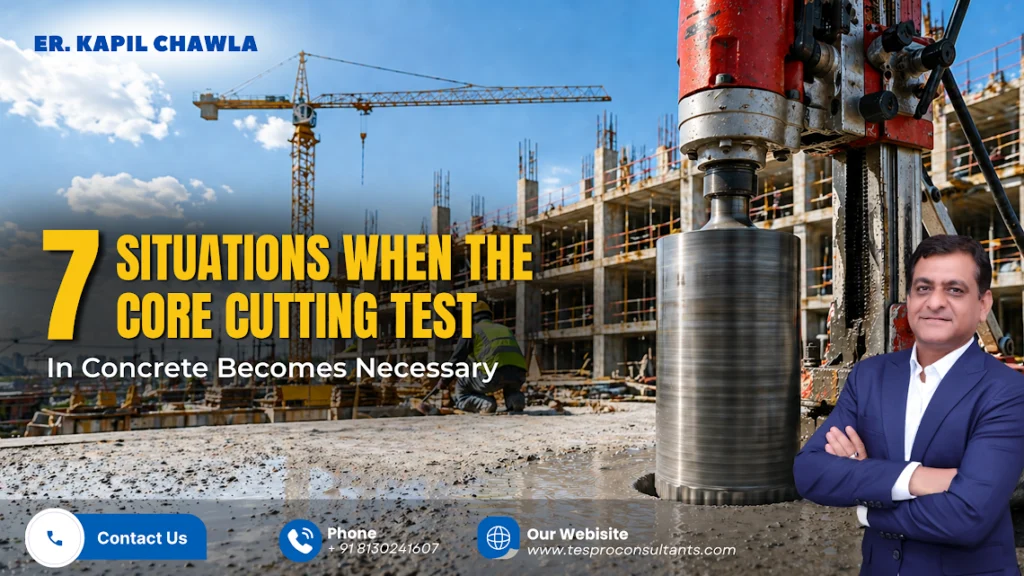
The core cutting test in concrete is used when engineers need to know the real strength of concrete inside a structure, not just on the surface. In this method, a small cylindrical sample is taken from the hardened concrete and tested in a lab. This helps in getting accurate and practical data about the structure’s condition. While NDT in concrete methods like rebound hammer or ultrasonic tests are useful for quick checks, they may not always give exact strength values. Because of that, engineers rely on the concrete core test method when there is any doubt about safety or performance.
Why the Core Cutting Test is Important in Structural Engineering
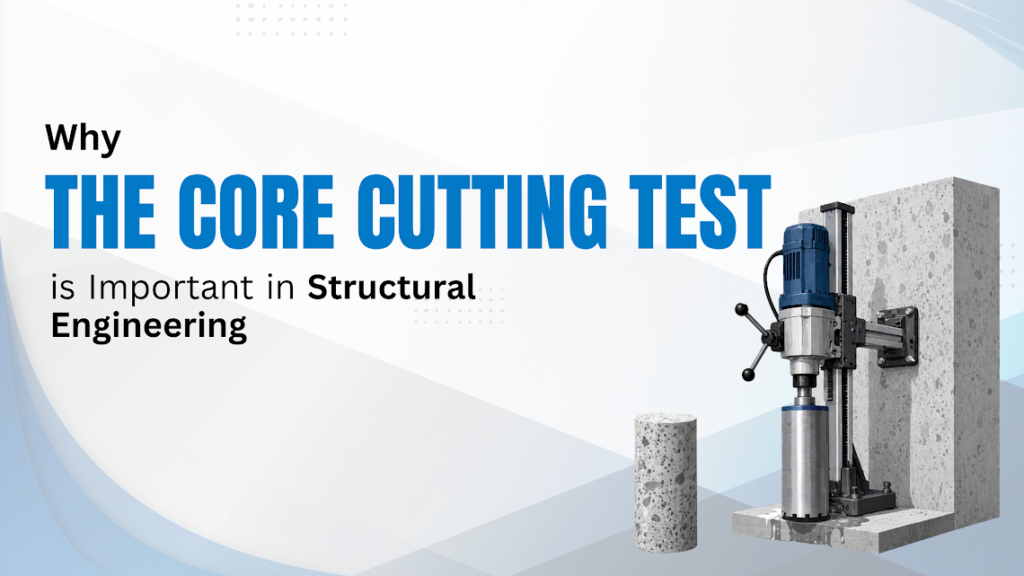
- Gives real strength from inside the structure, not just surface-level data
- Helps confirm the results of earlier concrete strength testing
- Useful when there is confusion between lab and site results
- Supports safe decisions before repair, redesign, or load increase
- Detects hidden defects like voids, weak bonding, or poor compaction
- More reliable when compared to only using NDT in concrete
- Helps engineers avoid risk and ensure long-term stability
Some Situations When the Core Cutting Test in Concrete Becomes Necessary
This test is mainly required when there is doubt about strength, visible damage, or when exact data is needed before taking important engineering decisions.
1. When Concrete Cube Test Results Are Doubtful
- Cube test results do not match the design strength
- Samples may not reflect actual site conditions
- Improper curing or handling of cubes can affect results
- There may be a variation in batching or mixing
- Engineers need actual in-site strength for clarity
- Helps verify earlier concrete strength testing results
2. During the Structural Audit of Existing Buildings
- Old structures need proper strength verification
- Construction records are missing or incomplete
- Visible damage or ageing raises concern
- Helps understand the internal concrete condition
- Useful before the reuse or resale of a building
- Supports repair and strengthening decisions
3. Before Renovation or Structural Modification
- Required before adding extra floors or heavy loads
- Helps check if the existing structure can handle changes
- It’s Important before drilling, cutting, or redesigning work
- Reduces risk of failure during renovation
- Ensures safe planning and execution
- Gives engineers confidence in design decisions
4. In Case of Structural Failure or Collapse Investigation
- Used to find the exact reason behind failure
- Checks if low-quality concrete caused the issue
- Helps study structural cracks in concrete in detail
- Supports technical reports and expert analysis
- Important in legal or insurance cases
- Provides strong proof for the investigation
5. For Compliance with Safety and Quality Standards
- Needed in projects with strict quality requirements
- Confirms structure meets safety guidelines
- Used before final approval or project handover
- Required in government or high-risk structures
- Part of detailed concrete quality testing
- Ensures durability and long-term performance
Procedure of Core Cutting Test (Step-by-Step)
- Step 1: Select Location
Engineers choose the test area based on design or visible issues. - Step 2: Core Extraction
A drilling machine is used to carefully cut a cylindrical sample from concrete. - Step 3: Sample Handling
The sample is properly labelled and stored to avoid mix-up. - Step 4: Lab Testing
The sample is sent to a lab for strength testing. - Step 5: Compression Check
The core is tested under pressure to measure its strength. - Step 6: Result Review
Results are compared with the required values for the final decision.
Advantages of the Core Cutting Test in Concrete
- Provides accurate and direct strength measurement
- Helps in making practical engineering decisions
- Useful for both new construction and old structures
- Supports detailed investigation of defects
- Essential when high accuracy is required in testing
- Plays a key role in reliable concrete quality testing
For reliable testing and expert guidance, Er. Kapil Chawla of TESPRO Consultants is a trusted professional in the field. With strong practical knowledge and experience in the core cutting test in concrete, he ensures accurate testing, clear reporting, and safe solutions for all types of structural projects.
Explore more: If planning to build your dream home?
Check out Eternal Foundations—a helpful guide to building a strong, safe home that lasts for generations.📩 For a free e-book, email me at kapil.chawla@tesproconsultants.com