

Concrete is one of the most commonly used materials in construction all over the world. Because of that, checking its quality and strength becomes very important for the safety and long life of any structure. On-site testing helps engineers understand whether the concrete is performing as expected or not. So, concrete strength testing methods are used to check the condition and reliability of concrete during construction. Here, we will look at six simple and widely used methods that help in checking concrete strength and quality directly at the site.
Understanding Concrete Strength Basics
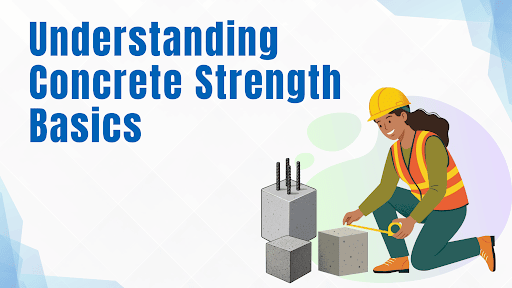
- Concrete Strength Definition: Concrete strength refers to the ability of concrete to withstand load without failing.
- Why It’s Important: Ensuring concrete quality testing is vital for structural integrity, safety, and performance.
- Compressive Strength: Compressive strength is the most common measure of concrete strength, determined by its ability to resist compression forces.
- Testing Procedures: Testing concrete strength involves different methods to assess its performance under various conditions.
- Factors Affecting Strength: Material quality, curing time, and environmental factors affect concrete strength.
6 Concrete Strength Testing Methods
There are several methods to test concrete strength, each offering unique advantages. Let’s look at six of the most commonly used concrete strength testing methods.
- Cube Compression Test (Most Reliable Method)
- The most trusted test for determining concrete compressive strength.
- A cube sample of concrete is subjected to compression until it fails.
- Provides precise results based on the material’s strength.
- Easy to perform on-site and cost-effective.
- Commonly used to measure concrete strength in the early stages of curing.
- Rebound Hammer Test (Quick Surface Check)
- Uses a spring-loaded hammer to strike the concrete surface.
- Measures the rebound of the hammer, indicating surface strength.
- Quick and non-destructive, ideal for surface-level checks.
- Provides a quick estimate of the concrete’s surface hardness.
- Not as accurate for determining internal strength, but useful for preliminary concrete strength test on site.
- Ultrasonic Pulse Velocity (UPV) Test (Internal Quality Check)
- Measures the speed of an ultrasonic pulse passing through the concrete.
- Helps evaluate the homogeneity and internal strength of concrete.
- Can detect voids, cracks, and flaws in concrete structures.
- Non-destructive method ideal for assessing large areas or inaccessible sections.
- Provides more detailed insight into concrete’s internal quality than surface tests.
- Core Cutting Test (Actual Strength from Structure)
- Involves drilling into the concrete structure to extract a core sample.
- The core sample is tested in a lab to determine its compressive strength.
- Provides actual strength values for hardened concrete.
- It’s invasive and requires precise equipment for accurate results.
- Best used for evaluating the strength of older structures or on-site concrete.
- Slump Test (Workability Linked to Strength)
- Measures the consistency and workability of fresh concrete.
- A higher slump usually correlates with better workability, which can impact strength.
- Easy and quick method for assessing concrete mix before pouring.
- Does not directly measure strength, but provides valuable information for adjusting the mix.
- Ideal for ensuring a good mix for optimal curing and strength.
- Pull-Out Test (In-Place Strength Measurement)
- Measures the resistance of an embedded steel rod to being pulled out of concrete.
- Indicates the strength of concrete in real-time conditions without damaging the structure.
- Useful for testing strength at various depths.
- Non-destructive, quick, and effective for on-site assessments.
- Provides an immediate result but may require calibration for accuracy.
Choosing the Right Testing Method on Site
Choosing the correct concrete strength testing methodsis crucial for accurate results and ensuring the safety and reliability of a structure.
- Cube Compression Test → Best for precise, reliable measurements.
- Rebound Hammer Test → Ideal for quick surface checks but not for deep evaluations.
- UPV Test → Use for internal quality assessment and detecting hidden flaws.
- Core Cutting Test → Accurate for measuring actual strength, but invasive.
- Slump Test → Essential for assessing the workability of fresh concrete.
- Pull-Out Test → Best for real-time, non-destructive strength measurements.
Each method has its strengths, so it’s essential to choose the one that aligns with your project requirements. Factors like the age of the concrete, the nature of the structure, and the level of accuracy needed should guide your decision.
For more information on how to calculate concrete compressive strength and expert guidance on concrete quality testing, and concrete strength methods, contact Er. Kapil Chawla of TESPRO Consultants. With years of experience in the field, provides professional advice to ensure your construction projects meet the highest quality standards.
Explore more: If planning to build your dream home?
Check out Eternal Foundations—a helpful guide to building a strong, safe home that lasts for generations. 📩 For a free e-book, email me at kapil.chawla@tesproconsultants.com