
A building project can look straightforward until the structural drawings start taking shape.
A beam may be larger than expected. Reinforcement quantities may be higher than planned. The foundation may not fully suit the ground conditions. Each decision can affect concrete, steel, labour, construction time, and eventually the project budget.
This is why structural planning needs to happen before construction begins.
The aim is not simply to reduce material quantities. A good design should balance safety, performance, constructability, and cost. This is where the engineering design process becomes important.
How the Engineering Design Process Finds Savings Without Cutting Corners
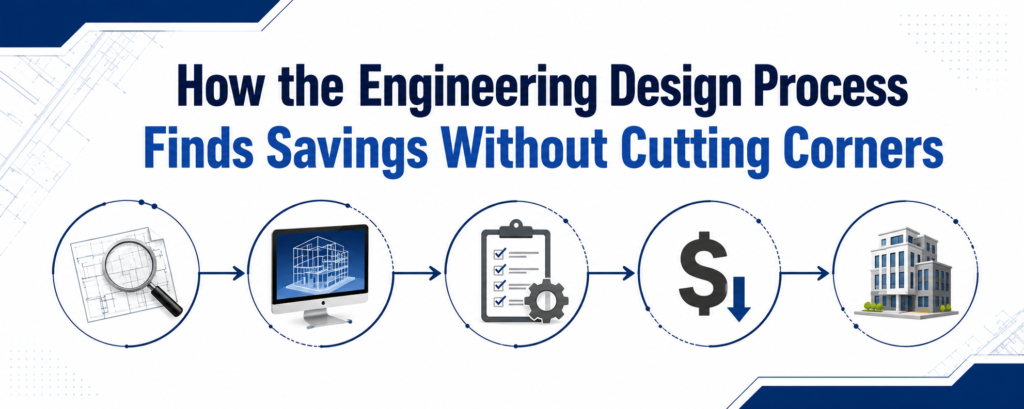
Structural optimization starts with understanding how forces move through a building.
Dead loads, live loads, wind actions, and seismic forces need to be considered according to project requirements. These forces travel through slabs, beams, columns, and foundations.
If the load path is inefficient, the structure may require larger members or additional reinforcement. A coordinated structural system can distribute forces more effectively.
This is where a structural engineer plays an important role. The objective is not to make every member smaller, but to understand what the building actually needs and design it efficiently.
Why RCC Structural Design Needs a Whole-Building View
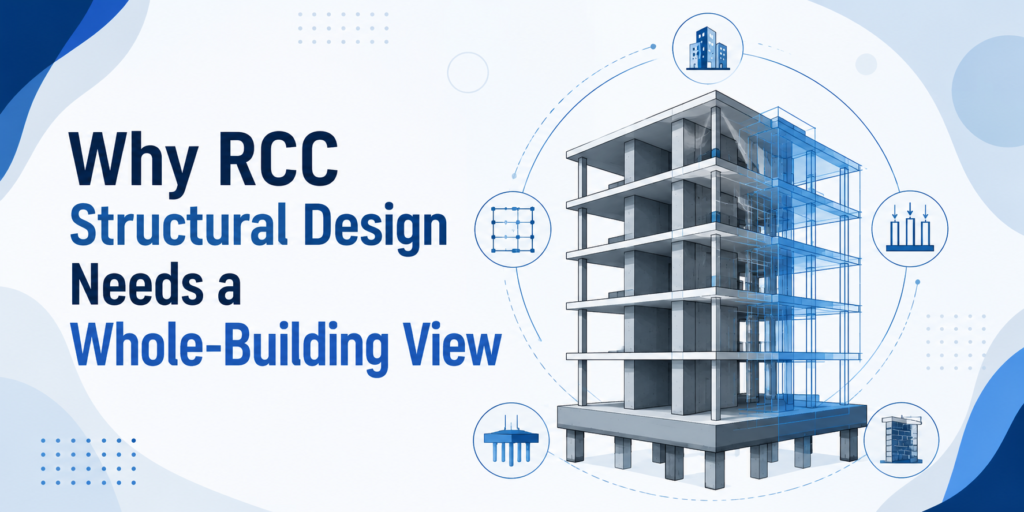
In RCC structural design, one change can affect several other parts of the structure.
For example, reducing a beam’s depth may appear to save concrete. However, if it requires additional reinforcement or creates deflection concerns, the overall design may not become more economical.
The same applies to columns, slabs, and foundations. Their dimensions and reinforcement are connected through the behaviour of the complete structural system.
Effective structural design services therefore consider the building as a whole rather than optimising individual members separately.
A practical design considers:
- Member dimensions and reinforcement
- Strength and deflection requirements
- Material quantities and constructability
This helps prevent a saving in one area from creating an unnecessary cost elsewhere.
How Ground Conditions Can Change the Foundation Decision
The foundation may be hidden below the building, but it can have a major effect on construction costs.
Soil bearing capacity, settlement, and groundwater conditions can influence which foundation solution is suitable. Depending on the project, engineers may consider isolated footings, combined footings, raft foundations, or other options.
Choosing a foundation without considering available ground information can result in unnecessary excavation, excess concrete, or performance concerns later.
A structural engineer should therefore consider geotechnical information early, allowing the foundation to respond to actual site conditions rather than assumptions.
Where Earthquake Resistance Changes the Cost Conversation
Cost reduction has clear limits when seismic safety is involved.
Earthquake resistant building design requires an appropriate structural configuration and a reliable path for transferring earthquake forces. Member design, reinforcement detailing, stiffness, strength, ductility, and connections all influence how a building responds to lateral movement.
Simply adding more steel or concrete does not automatically make a building safer.
The objective is to achieve the required structural performance while keeping the design practical and efficient. Technical judgement remains essential in making these decisions.
Where AI Tools for Civil Engineers Can Support the Design Team
Technology is changing how engineering work is carried out.
AI tools for civil engineers can assist with data processing, design support, optimisation, and repetitive tasks. They may help engineers compare alternatives or handle large amounts of information more efficiently.
However, AI cannot take responsibility for structural safety.
Its outputs still need to be checked against project requirements, applicable standards, structural behaviour, and engineering judgement. Technology can support the design team, but qualified professionals must determine whether a solution is technically appropriate.
Why Fixing a Design Problem on Paper Costs Less
Consider a beam that conflicts with an architectural opening or service route.
During design coordination, the drawings can be reviewed and changed. Once construction has reached that stage, fixing the same issue may mean breaking completed work, wasting materials, increasing labour costs, and causing delays.
This is why structural engineering consultants can add value before construction begins.
Early coordination between structural, architectural, and other project drawings can help identify practical issues before they become expensive site problems.
Structural Optimization Is More Than Using Less Material
There is an important difference between cutting quantities and improving a structural design.
Using less steel or concrete may appear economical, but it can create problems if the design no longer meets strength, serviceability, or constructability requirements.
Real optimisation means balancing:
- Safety and structural performance
- Material efficiency
- Constructability
- Overall project cost
The engineering design process provides a framework for making these decisions before construction begins.
Better Decisions Before Construction Can Protect the Budget
Construction cost control should not begin with, “Where can we use less material?”
A better question is:
“Where can the design become more efficient without affecting the required performance?”
That change in thinking can make structural planning much more valuable. The goal is not to cut corners, but to make informed decisions early, when changes are easier and less expensive.
TESPRO Consultants provides structural design services and engineering support for projects requiring practical and technically considered structural solutions.
Planning a construction project? Connect with TESPRO Consultants to discuss your structural requirements and develop a design approach focused on safety, efficiency, and performance.
Explore more: If planning to build your dream home?
Check out Eternal Foundations—a helpful guide to building a strong, safe home that lasts for generations.
📩 For a free e-book, email me at kapil.chawla@tesproconsultants.com