
When people start building a house, they mostly focus on tiles, paint, or interior work. But the real strength of a building depends on its structure. One of the most important parts of any structure is the column. The correct column size in construction in India plays a major role in the safety and life of the building. If the column size is too small or poorly designed, cracks, bending, or even structural failure can happen later. Because of that, proper beam and column design should always be done before construction starts. A good structural engineer for home construction studies the load, soil conditions, and building plan before deciding the correct column dimensions. Also, following proper IS codes for building construction helps maintain safety and structural balance.
Why Choosing the Right Column Size in Construction Matters
- Load Support: Column size in construction in India carries the total load of slabs, beams, walls, and floors safely to the foundation.
- Crack Control: Correct column dimensions reduce wall cracks and structural stress in long-term use.
- Earthquake Safety: Strong columns improve resistance during earthquakes and reduce major structural damage.
- Floor Stability: Proper beam and column design keep every floor balanced and structurally stable.
- Code Compliance: Following the IS codes for building construction ensures safer and approved structural work.
- Building Life: Good column planning increases the life and durability of residential buildings.
Avoid These 5 Mistakes in Column Size in Construction in India
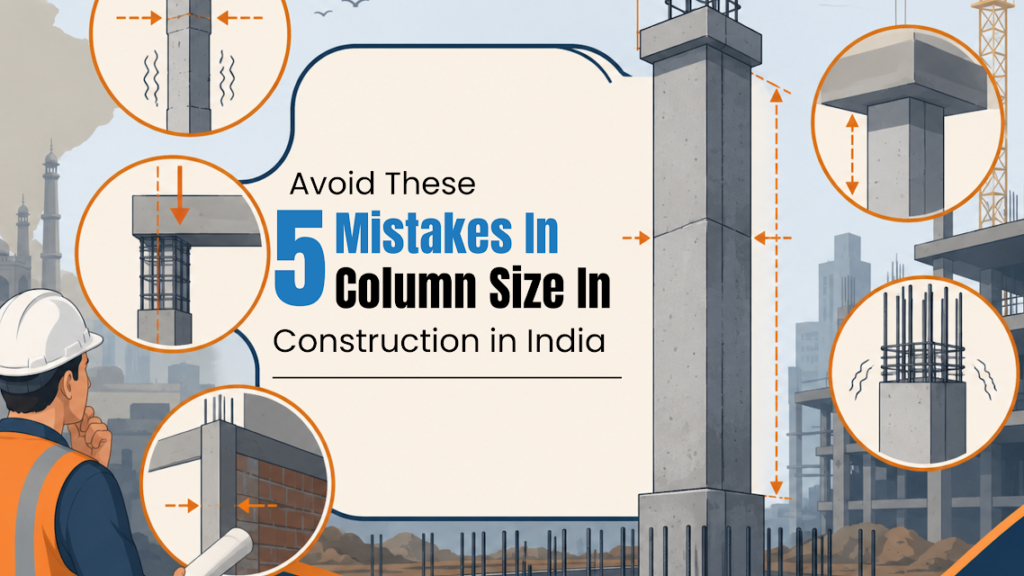
Many structural issues happen because builders ignore basic engineering rules during planning. Below are some common mistakes to avoid when deciding on the column size for residential building projects.
1. Ignoring Soil Condition Before Deciding Column Size
- Weak soil needs stronger and larger columns.
- Different soil types carry different loads.
- Soil testing helps engineers design safe foundations.
- A poor soil study can lead to settlement cracks later.
- A structural engineer for home construction should always check soil reports first.
2. Using the Same Column Size for Every Floor
- Ground floors usually carry more load than upper floors.
- Taller buildings need different column sizes at different levels.
- Uniform column sizes may reduce structural efficiency.
- Load calculations should be done floor by floor.
- Smart beam and column design improves overall strength.
3. Not Following Structural Engineer Recommendations
- Some owners change sizes to match the room design.
- Reducing column width without approval is risky.
- Engineers calculate loads based on safety standards.
- Ignoring technical drawings can weaken the structure.
- Proper engineering support improves long-term safety.
4. Choosing Small Column Sizes to Save Money
- Smaller columns may reduce strength significantly.
- Repair work later costs much more than proper planning.
- Thin columns can create bending and stability issues.
- Material savings should never compromise safety.
- Good building safety tips always focus on the structure first.
5. Ignoring Building Type and Load Requirements
- Residential, commercial, and industrial buildings need different designs.
- Duplex homes may need larger columns than single-floor homes.
- Parking areas increase load concentration in some sections.
- Heavy water tanks also affect column sizing.
- The proper column size for residential building depends on actual load calculations.
Common Column Sizes Used in Construction in India
| Building Type | Common Column Size | Usage |
| Small Single Floor House | 9” x 9” | Basic residential construction |
| G+1 Residential Building | 9” x 12” | Common home projects |
| G+2 Residential Building | 12” x 12” | Medium load structures |
| Duplex or Villa | 12” x 15” | Better load support |
| Commercial Building | 12” x 18” or bigger | Heavy load structures |
| Apartment Projects | Based on structural design | Depends on load calculations |
Choosing the correct column size in construction in India is not only about dimensions. It is about safety, durability, and proper engineering planning. A small mistake during structural design can create serious issues in the future. Because of that, every homeowner should work with an experienced structural engineer for home construction and follow proper IS codes for building construction from the beginning.
For safe, practical, and engineering-based structural solutions, consult TESPRO Consultants under the guidance of Er. Kapil Chawla for reliable building planning and structural consultancy services.
Explore more: If planning to build your dream home?
Check out Eternal Foundations—a helpful guide to building a strong, safe home that lasts for generations. 📩 For a free e-book, email me at kapil.chawla@tesproconsultants.com