
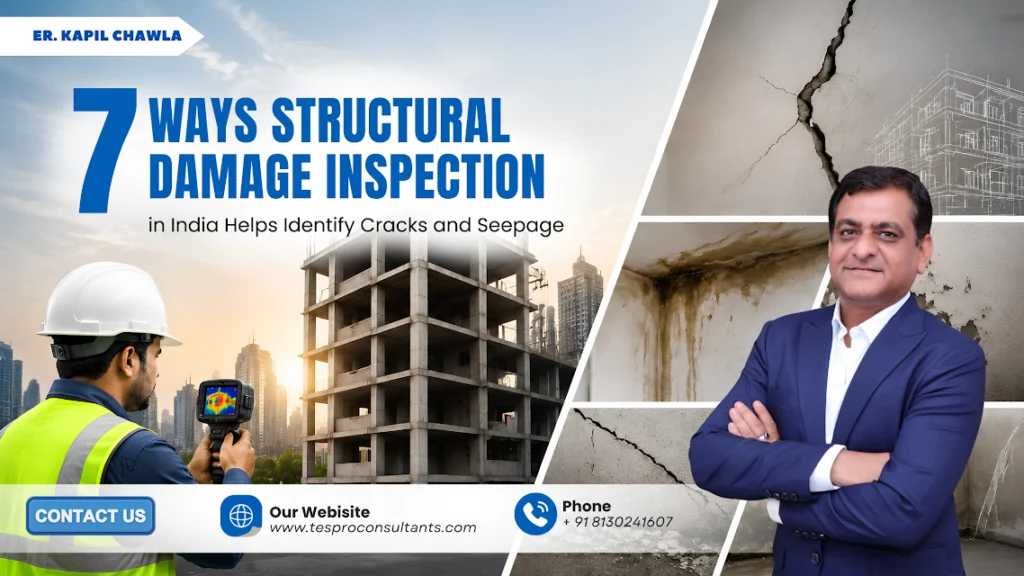
Buildings slowly develop problems because of weather changes, water leakage, poor construction quality, and ageing materials. Small cracks and seepage may look normal in the beginning, but later they can damage walls, ceilings, foundations, and even the complete structure. This is why structural damage inspection in India has become very important for residential and commercial properties. Professional building inspection services help identify weak areas, leakage points, and hidden structural problems before they become serious. A proper building structural inspection also helps engineers understand the condition of the building and suggest the right repair solutions.
7 Ways Structural Damage Inspection in India Helps Identify Structural Issues
Structural issues are not always visible from the outside. Sometimes, seepage develops inside walls, while cracks slowly weaken the concrete structure. Through proper inspection methods, engineers can detect these issues early and reduce future repair risks. Here are 7 practical ways a structural damage inspection in India helps identify cracks and seepage problems effectively.
1. Identifying Minor Structural Cracks Before They Become Serious
- Identifies tiny cracks before they grow.
- Tracks crack progression over time.
- Ensures safety for residents and occupants.
- Helps structural consultants in Delhi recommend timely repairs.
- Reduces risk of long-term structural damage.
2. Finding Hidden Seepage Behind Walls and Ceilings
- Reveals water seepage invisible to the eye.
- Prevents mold growth and dampness.
- Identifies leakage sources like plumbing or roof defects.
- Supports proper waterproofing and repair planning.
- Improves overall building durability through building safety inspection.
3. Inspecting Foundation Damage and Weak Structural Areas
- Detects foundation settlement or soil shifting.
- Highlights weak beams, columns, and load-bearing areas.
- Ensures that the building load is properly supported.
- Avoids potential building collapse or structural failure.
- Integrates findings into a comprehensive building structure audit.
4. Understanding the Real Causes Behind Building Cracks
- Differentiates between natural shrinkage and structural faults.
- Identifies material fatigue or poor-quality construction.
- Finds moisture-related causes behind cracks.
- Guides engineers in accurate repair planning.
- Helps property owners understand the importance of building structural inspection.
5. Reducing Future Structural Repair and Maintenance Costs
- Prevents expensive repairs through early detection.
- Minimizes repeated maintenance work.
- Saves money by addressing small issues early.
- Allows better budget planning for building upkeep.
- Adds value to property by maintaining structural health through building inspection services.
6. Protecting Buildings From Rainwater and Moisture Damage
- Detects areas vulnerable to rainwater penetration.
- Reduces damp walls and ceilings.
- Prevents corrosion of steel reinforcement.
- Improves long-term durability of concrete and plaster.
- Ensuring safe and dry living spaces, a key goal of structural damage inspection in India.
7. Planning Proper Structural Repairs and Waterproofing Solutions
- Helps choose the right repair methods.
- Guides the selection of effective waterproofing materials.
- Ensures repairs last longer and remain effective.
- Provides a clear roadmap for restoration after a building structural inspection.
- Allows structural consultants in Delhi to suggest engineering-focused solutions.
Advanced Structural Inspection Techniques Used by Engineers
- Visual Checks: Look for cracks, misalignment, and damage.
- Ultrasonic Testing: Detects internal weaknesses in concrete or steel.
- Infrared Scanning: Find hidden moisture and heat leaks.
- Core Sampling: Check concrete quality and strength.
- Load Testing: Ensure the building can safely carry the weight.
- Digital Mapping: Make detailed 3D structural models.
Common Structural Damage Problems Found in Indian Properties
- Damaged Walls: Small or deep wall cracks developed due to structural movement or foundation settling.
- Leaking Roofs: Water penetration from damaged roofing.
- Foundation Settlement: Uneven soil or foundation causing stress.
- Rusting Reinforcement: Corroded steel bars in concrete.
- Damp Ceilings: Moisture trapped behind plaster or tiles.
- Structural Tilts: Misaligned beams, columns, or walls.
For reliable building structure audit and building safety inspection, Er. Kapil Chawla of TESPRO Consultants provides expert, engineering-focused services. His team offers professional building structural inspection, detects cracks and seepage, and recommends practical repair and waterproofing solutions for homes and commercial properties.
Explore more: If planning to build your dream home?
Check out Eternal Foundations—a helpful guide to building a strong, safe home that lasts for generations. 📩 For a free e-book, email me at kapil.chawla@tesproconsultants.com