

In construction, checking concrete quality is very important because safety depends on it. So, understanding what is ultrasonic pulse velocity test is helps engineers, contractors, and site teams make better decisions during and after construction. This method is widely used in concrete quality testing because it gives quick and reliable results without damaging the structure. Also, it is a popular NDT test for concrete, meaning testing can be performed without breaking or cutting the material. Because of that, it is very useful for both new and old structures.
UPV testing plays an important role in ensuring the long-term strength and durability of concrete structures. So, this test is important because it ensures quality, saves time, and helps maintain safety standards in all types of construction projects.
What is Ultrasonic Pulse Velocity Test (UPV)?
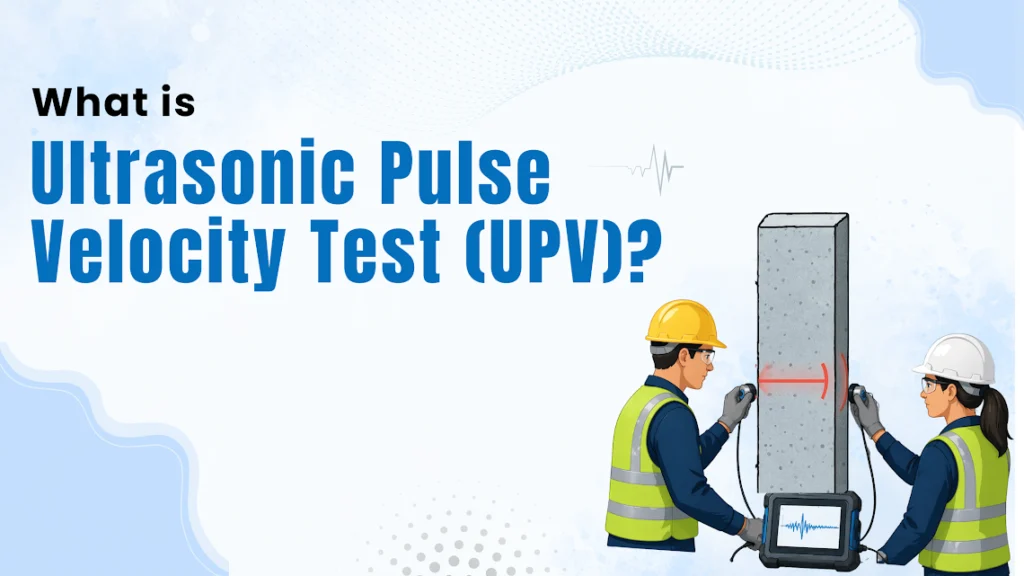
- The UPV test is a non-destructive method to check concrete quality
- It uses ultrasonic waves to measure the internal condition
- Higher velocity means dense and strong concrete
- Lower velocity may indicate cracks or voids
- It is widely used in concrete strength testing methods
- 5 important things everyone should know are explained below
So, UPV testing helps engineers quickly understand concrete condition without damage, making it a practical and trusted method for regular inspection and quality control.
UPV Test Procedure (Step-by-Step for Engineers)
- Step 1: Clean the concrete surface properly
- Step 2: Apply coupling gel on the surface
- Step 3: Place the transmitter and receiver correctly
- Step 4: Send an ultrasonic pulse through the concrete
- Step 5: Record the travel time of the pulse
- Step 6: Calculate velocity for concrete strength testing
Following the correct steps ensures accurate readings, because even small mistakes can affect results, and proper testing helps in making correct engineering decisions on site.
How to Interpret UPV Test Results
- Above 4.5 km/s → Excellent quality concrete
- 3.5 to 4.5 km/s → Good quality
- 3.0 to 3.5 km/s → Medium quality
- Below 3.0 km/s → Poor quality
- Results may change due to moisture and temperature
- Therefore, always compare multiple readings
So, proper interpretation is necessary because correct analysis helps engineers identify defects early and take action before small issues turn into major structural problems.
Applications of UPV Test in Real Projects
- Used in bridges and highways for safety checks
- Helps detect cracks in buildings
- Useful in dams and tunnels for internal inspection
- Applied in old structures before repair work
- Supports overall concrete quality testing on-site
UPV testing is widely used in real projects because it helps engineers check safety, plan repairs, and maintain long-term performance of structures without damaging them.
Advantages of UPV Test
- Non-destructive, so no damage to the structure
- Quick and easy to perform
- Gives reliable and fast results
- Detects internal defects clearly
- Cost-effective compared to other tests
- Commonly used as an NDT test for concrete
So, the UPV test is beneficial because it saves time, reduces cost, and provides reliable results, making it one of the most preferred methods for concrete inspection today.
Relevant Codes and Standards Engineers Must Know
| Code / Standard | Description |
| IS 13311 (Part 1) | Indian standard for UPV testing |
| ASTM C597 | International standard for ultrasonic testing |
| BS EN 12504-4 | European standard for concrete testing |
| BIS Guidelines | General rules for testing and reporting |
Follow proper guidelines for accurate results. These codes support standard concrete strength testing methods. So, following proper codes is important because it ensures accuracy, consistency, and reliability in testing, which is necessary for maintaining safety and quality in construction projects.
Er. Kapil Chawla from TESPRO Consultants provides expert guidance to understand what is ultrasonic pulse velocity test is and advanced concrete evaluation, helping ensure accurate results, strong structures, and reliable construction quality across all types of projects.
Explore more: If planning to build your dream home?
Check out Eternal Foundations—a helpful guide to building a strong, safe home that lasts for generations.📩 For a free e-book, email me at kapil.chawla@tesproconsultants.com