
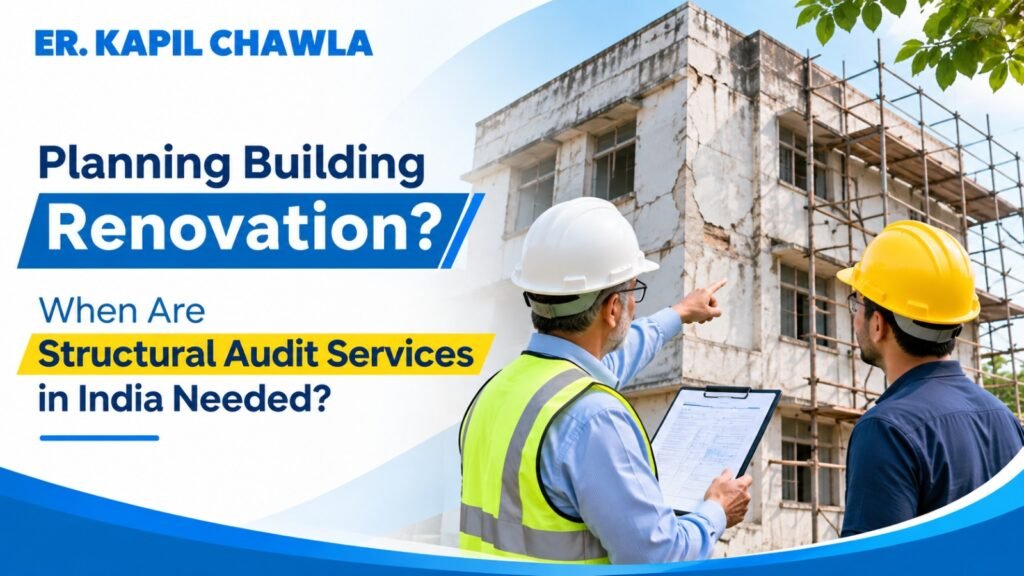
Renovating an old building often starts with exciting ideas, such as a new layout, modern finishes or even an extra floor. However, the existing structure decides how much of that plan is actually possible, because beams, columns and foundations weaken quietly over the years. As a result, hidden damage can turn a simple upgrade into an expensive problem. This is why structural audit services in India are treated as the first step before any major renovation, since they reveal what the building can carry and what needs repair.
Signs of Structural Deterioration That Should Not Be Overlooked
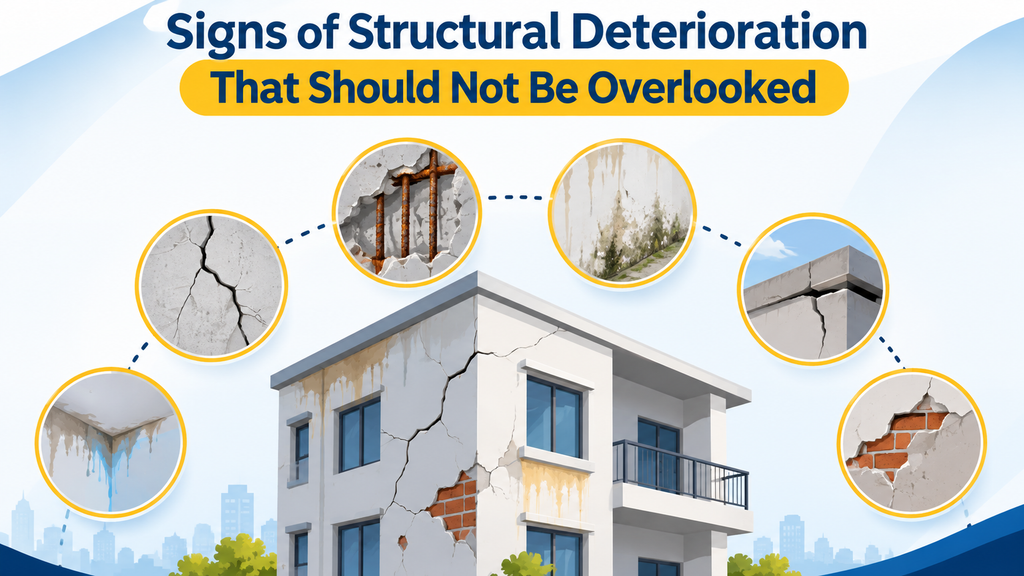
Most owners notice a few warning signs well before an audit begins. These signals should never be ignored, because each one points to a deeper issue inside the structure.
- Wall Cracks: Diagonal or stair-step cracks near openings often indicate settlement or overstressed members, so they need investigation instead of simple plastering.
- Rebar Corrosion: Rust stains and spalling concrete show steel is losing section, so strength drops long before any visible failure appears.
- Sagging Slabs: Visible deflection, ponding water or jammed doors suggest beam or slab distress, which is why measured evaluation beats guesswork.
- Damp Patches: Persistent seepage corrodes embedded steel and weakens concrete, and over time it accelerates deterioration wherever waterproofing has failed.
- Tilting Columns: Out-of-plumb columns or uneven floors indicate foundation movement, and if left unchecked, this can lead to structural failure in buildings.
How Structural Audit Services in India Help Assess Renovation Feasibility
Once these signs are noticed, the next step is a formal audit, because it shows whether the renovation is realistic and safe.
- Capacity Check: Engineers study load paths and member strength, and confirm whether the existing frame can safely support the planned changes.
- Material Testing: Next, rebound hammer, ultrasonic pulse velocity and core tests reveal actual concrete quality, which is more reliable than outdated drawings.
- Code Compliance: A structural audit of buildings in Delhi verifies seismic Zone IV needs, and every building structure audit checks IS codes.
- Repair Scope: Finally, structural audit services in India separate minor repairs from retrofitting needs, so owners can budget realistically before design begins.
Structural Assessment Before Adding New Loads to an Existing Building
After the current condition is clear, the next question is how much extra load the building can take. Therefore, engineers check each planned change separately, as shown below.
| Planned Change | What Engineers Verify |
| Extra floor | Foundation capacity and reserve strength of columns |
| Water tank or heavy equipment | Slab and beam load limits |
| Wall removal | Load path and alternate support |
| Residential to commercial use | Higher live-load compliance |
- Load Path: Every new load must travel safely down to the foundation, therefore each member along that route is checked individually.
- Foundation Reserve: Soil condition and footing size decide whether the base can take additional floors, otherwise differential settlement may appear later.
- Health Assessment: A structural health assessment combines survey, testing and calculations, so it gives one clear picture of current condition.
- Ongoing Monitoring: Furthermore, on critical or ageing buildings, structural health monitoring tracks crack movement and vibration during and after construction.
FAQs
- Can I add a floor to a 30-year-old building without checking it first?
No, because older buildings were often designed for lower loads and earlier codes. Without testing, the remaining reserve strength stays unknown. - How long does a structural audit of buildings in India usually take?
A small residential building may take a few days, while larger multi-storey properties can take a few weeks, depending on testing and access. - Does a building structure audit mean my building is unsafe?
Not at all. Most audits end with a repair list rather than a demolition notice, since the aim is to understand condition early. - Should I hire an engineering consulting company or simply trust my contractor?
A contractor builds, whereas an engineering consulting company independently assesses safety and design. This separation gives you an unbiased technical opinion. - Is an audit required before every renovation?
Rules vary by authority and building age. Even where it is optional, structural audit services in India are wise before any change affecting load or layout.
Making Renovation Decisions Based on Structural Findings
Once the audit report is ready, the findings should guide every decision that follows, from budget to design.
- Proceed Safely: If the structure shows adequate reserve strength, renovation can continue as planned, along with routine quality checks at every stage.
- Repair First: However, where corrosion or cracking is found, repairs like jacketing or grouting should come before any new construction begins.
- Retrofit Needed: Buildings failing seismic or load checks may need strengthening, for example through added shear walls, steel bracing or fibre wrapping.
- Redesign Plans: If the frame cannot take the intended load, the architectural plan should change instead of forcing the structure to adapt.
Get Expert Guidance from Er. Kapil Chawla
If you are planning a renovation, expansion or change of use, get the structure examined before design begins. Er. Kapil Chawla of TESPRO Consultants brings practical engineering experience to building evaluation, testing and repair planning. For dependable structural audit services in India, connect with TESPRO Consultants and let the facts guide your project.
Explore more: If planning to build your dream home?
Check out Eternal Foundations—a helpful guide to building a strong, safe home that lasts for generations.
📩 For a free e-book, email me at kapil.chawla@tesproconsultants.com