
Old properties can look like a good deal until you examine the structure behind the paint. Many buildings that seem well maintained from outside have hidden issues; corroded reinforcement, seepage-affected slabs, or foundation movement that first shows up as hairline cracks.
A structural audit of buildings helps identify these problems before the purchase is complete. It is not only about spotting cracks. It is about understanding why they appeared, whether they are active, and how much they affect the building’s safety.
What Structural Audit of Buildings Reveals About an Older Building ?
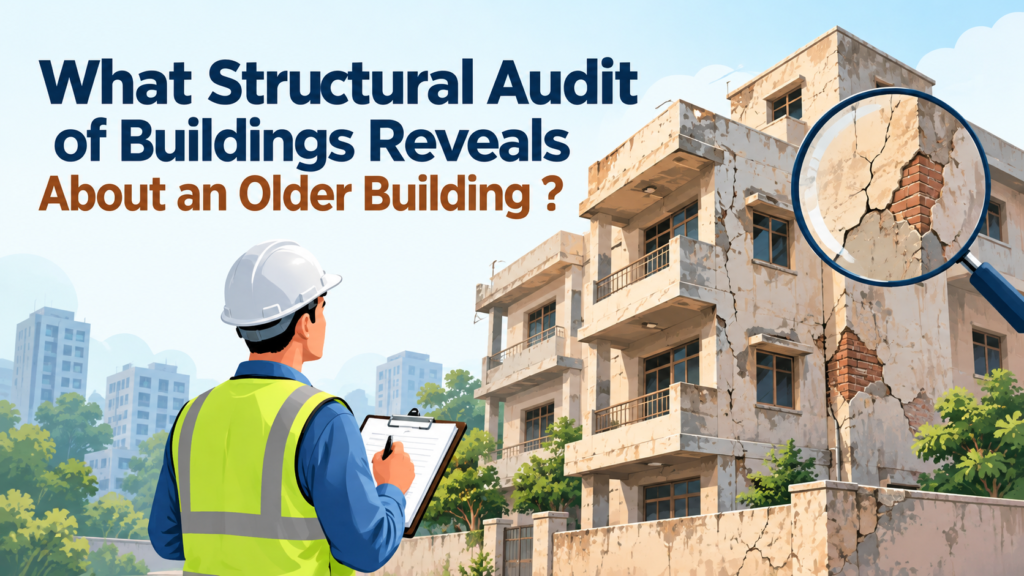
A structural audit of buildings checks the load path, the route through which a building’s weight travels from slabs and walls to beams, columns, and the foundation. The engineer examines whether each part of this path is still performing properly.
The inspection usually covers:
- Cracks, spalling, exposed reinforcement, and corrosion in RCC members
- Sagging slabs, beams, or cantilever balconies
- Foundation settlement or differential movement
- Leakage and its effect on concrete durability
- Past alterations that may have changed the load path
In older RCC buildings, reinforcement corrosion is a major concern. When concrete carbonates or chloride enters through leakage, the protective layer around steel reduces. The steel rusts, expands, and pushes off the concrete cover. This is why rust stains, hollow plaster, or exposed bars should never be treated as minor issues.
Reading the Warning Signs Behind Structural Cracks
Not every crack means a building is unsafe, but every crack has a cause. Vertical cracks at wall junctions may be due to shrinkage or thermal movement. Diagonal cracks near openings can indicate differential settlement. Horizontal cracks in beams or slabs, especially with seepage, may point to corrosion or flexural distress.
A proper building structure audit identifies these patterns. The engineer checks whether a crack is dormant or active, measures its width, studies its direction, and links it to the affected member. This is what makes a technical audit different from a basic visual inspection.
Structural Red Flags Property Buyers Should Never Overlook
Before buying an old property, look beyond interiors and finishes:
- Cracks wider at one end may suggest ongoing movement
- Rust-coloured lines along beams or slabs can indicate corrosion
- Hollow-sounding plaster may mean delaminated concrete
- Sloping floors, jamming doors, or reopening gaps need investigation
- Removed walls or added slabs can alter the load path
These signs do not always mean the property is beyond repair, but they show that a structural health assessment is needed before you commit.
How Audit Findings Can Influence Your Property Purchase
The real value of a structural audit of buildings is that it turns uncertainty into a cost decision. If the report finds only surface deterioration, you can proceed with normal maintenance. If it identifies corroded reinforcement, distressed slabs, or foundation movement, you can ask for repairs, negotiate the price, or reconsider the deal.
It also matters if you plan to renovate. Removing a wall, adding a floor, or increasing live load changes the load distribution. An audit tells you whether the existing structure can handle the revised load or whether strengthening is required.
Sometimes, the engineer may advise structural health monitoring in civil engineering. This can include crack-width measurement, settlement observation, or vibration monitoring when a defect is active but not yet severe enough for immediate strengthening.
When an Older Building Needs a Professional Audit
Arrange an audit if the building is over 15 to 20 years old, has recurring leakage or cracking, has undergone alterations, or is close to active construction. Professional structural audit services are also useful before buying a property for rental, commercial use, or redevelopment.
TESPRO Consultants provides structural audit, structural health monitoring, and building stability assessment services for buyers who want technically sound, informed property decisions.
FAQs
1. What Goes Into a Detailed Structural Audit of a Building?
A structural audit of buildings is a technical inspection of a structure’s load-bearing system. It evaluates foundations, columns, beams, slabs, and walls for corrosion, cracking, settlement, and seepage-related damage.
2. How is a building structure audit different from a home inspection?
A building structure audit focuses on structural performance, load path, RCC condition, foundation movement, and durability. A home inspection generally covers fittings, finishes, and basic maintenance.
3. Do structural audit services include structural health monitoring?
Many structural audit services include structural health monitoring when a defect needs long-term observation. This may involve crack-width tracking, settlement readings, or vibration monitoring to check whether the condition is worsening.
4. Is a structural health assessment necessary for older properties in Delhi?
Yes. A structural health assessment is especially useful for older Delhi properties with leakage, alterations, cracking, or nearby excavation. Experts offering structural audit of buildings in Delhi can identify site-specific risks and recommend repair or monitoring measures.
Explore more: If planning to build your dream home?
Check out Eternal Foundations—a helpful guide to building a strong, safe home that lasts for generations.
📩 For a free e-book, email me at kapil.chawla@tesproconsultants.com