
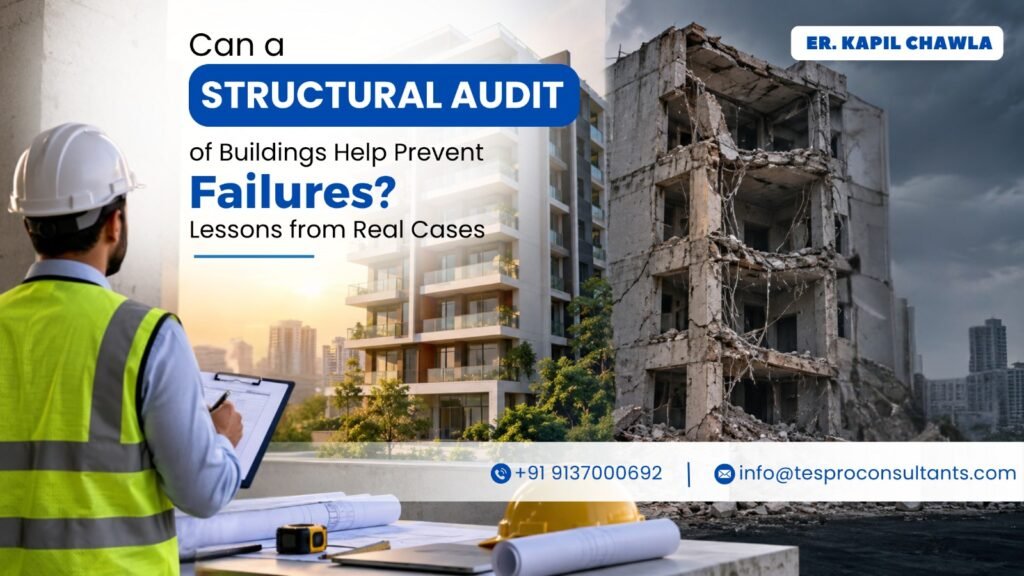
A building does not usually become unsafe without giving some warning. Sometimes it starts with a crack that keeps coming back. In another case, rust appears on a concrete surface, a beam begins to deflect, or someone adds another floor without checking whether the existing structure can take the extra load. A structural audit of buildings helps engineers investigate these changes and understand what is really happening inside the structure.
Evaluating Cracks and Their Structural Implications
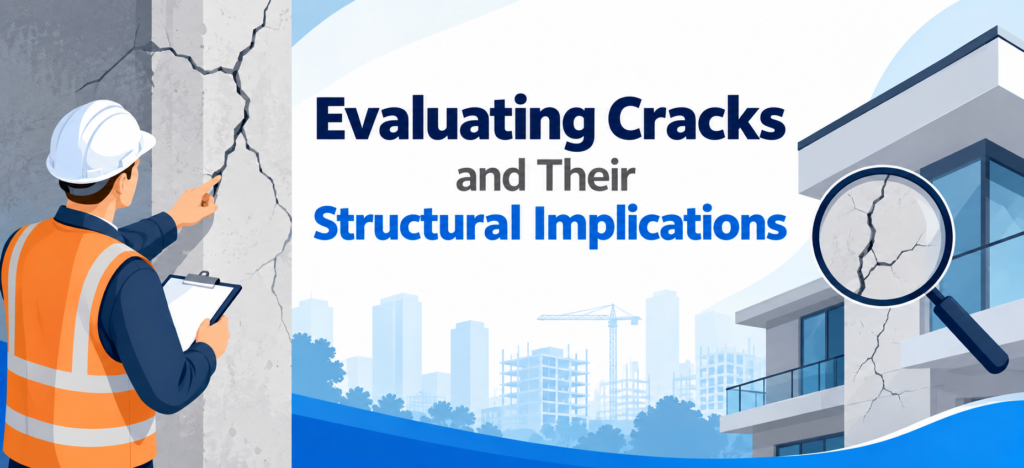
A crack by itself does not tell the complete story. Its location, width, direction, and whether it is growing over time are all important.
Take cracks around a beam-column junction. They may deserve closer attention, particularly when they occur along with exposed reinforcement, dampness, or damaged concrete. Engineers also look for corrosion, settlement and changes made to the building after its original construction.
That is the purpose of a proper building structure audit, to connect these observations and determine whether they point towards a structural concern.
What Engineers Check on Site
There is more to a structural assessment than walking through the building and photographing damaged areas. Engineers may examine:
- Structural and architectural drawings, where available
- Sizes and conditions of beams, columns and slabs
- Reinforcement and visible corrosion
- Crack locations and patterns
- Changes in building use and loading
- Additional floors or other alterations
- Signs of settlement or movement
- Overall structural and seismic performance
Testing may also be required. Rebound hammer and Ultrasonic Pulse Velocity (UPV) tests, for example, can provide information about concrete. But a test number on its own cannot decide whether a building is safe. Engineers have to read the results alongside site observations, drawings and calculations.
What Real Failures Tell Us
Many structural problems begin when a building is changed without considering its original design.
A column may be removed to create more space. A heavy machine may be installed on a floor that was not designed for it. An extra storey may be added, or excavation may take place close to an existing foundation.
Each of these changes can affect the way loads move through the structure.
Recent building incidents in India have also brought attention to unauthorised construction and alterations. While a structural audit services assessment cannot guarantee that a failure will never occur, an early assessment can bring hidden or developing problems to light.
What Happens After the Audit?
An audit should give the owner a clear idea of what needs to happen next. Depending on the findings, engineers may recommend:
- Repairing damaged structural members
- Strengthening beams, columns or slabs
- Retrofitting specific areas
- Restricting loads or certain activities
- Carrying out additional testing
- Keeping damaged areas under observation
Not every building needs major strengthening. Sometimes monitoring or routine repair is enough. The recommendation depends on the actual condition, design and use of the building.
Can AI Tools Replace Structural Engineers?
AI tools for civil engineers are becoming useful for organising inspection records, reviewing documents, analysing data and spotting patterns.
Still, structural safety cannot be handed over to software. Decisions about load capacity, strengthening, stability or continued occupancy require site experience, calculations and engineering judgement. AI can make certain tasks easier, but it does not replace the person responsible for the technical decision.
Why the Right Engineering Expertise Matters
An old building may have gone through several changes; repairs, renovations, changes in usage and even modifications that were never recorded. Two buildings of the same age can therefore have very different structural conditions.
Experienced structural engineering services can help bring these details together. A specialised engineering consulting company can inspect the structure, arrange testing where necessary and translate the findings into practical recommendations.
TESPRO Consultants offers structural audit, NDT, stability assessment and other engineering consultancy services for buildings and infrastructure.
FAQs
1. How is a structural audit different from a routine inspection?
A routine inspection generally focuses on visible problems. A structural audit looks deeper at structural members, loads, materials, alterations and overall stability.
2. Should a building be audited before adding another floor?
Yes. The existing structure should be checked before additional load is introduced. Foundations, columns, beams, slabs and load capacity all need to be assessed.
3. What documents are useful during an audit?
Structural drawings, architectural plans, previous repair records and details of modifications can help engineers understand how the building was designed and how it has changed.
4. Can an audit help before buying an old building?
Yes. It can bring deterioration, previous alterations and structural concerns to light before a purchase decision is made.
5. Does every audit mean that repair work is needed?
No. Depending on the findings, the recommendation could be monitoring, maintenance, further testing, strengthening or repair.
Make Structural Safety a Priority
A serious structural problem is much harder to deal with once it becomes an emergency. A timely structural audit of buildings in India gives owners a clearer picture of their property’s condition and helps them decide what action is actually required.
Explore more: If planning to build your dream home?
Check out Eternal Foundations—a helpful guide to building a strong, safe home that lasts for generations.
📩 For a free e-book, email me at kapil.chawla@tesproconsultants.com