
Constructing a home is one of the most important financial decisions for any family. However, many people try to reduce expenses by cutting costs during construction. While saving money may look helpful in the beginning, it can create major safety problems later. In many cases, poor decisions during construction can reduce the strength and life of the building. That is why home construction safety in Delhi has become an important topic today. India faces different challenges, such as changing soil conditions, heavy traffic vibrations, weather changes, and increasing urban development. Safety is not only about building walls and roofs; it is about creating a structure that remains safe for years. Proper planning, engineering checks, and following IS codes for building construction help make buildings stronger and safer.
5 Real Facts About Home Construction Safety in Delhi vs Cost Cutting
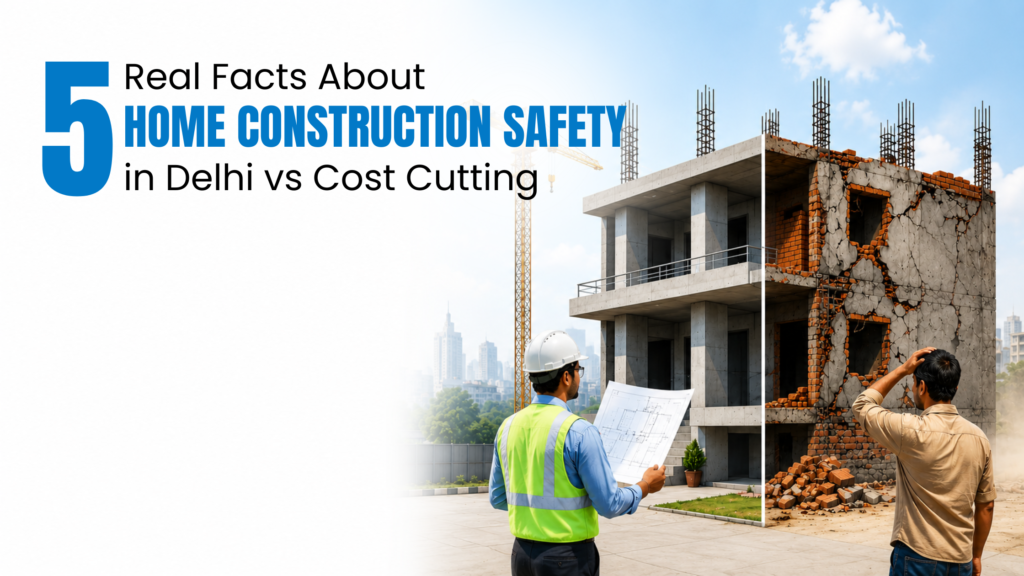
Many homeowners focus mainly on reducing construction expenses. However, Home construction safety in Delhi decisions made during the early stages directly affect the future of the building. These facts explain why engineering practices and safety checks are more valuable than short-term cost savings.
Fact 1 – A Structural Engineer Ensures Safety, Not Just Building Design
Many people think that a structural engineer only creates building drawings. In reality, a structural engineer for home construction plays a much bigger role.
- Checks the complete load-bearing capacity of the structure
- Calculates beam, column, and foundation requirements
- Suggests the correct steel and concrete specifications
- Identifies possible structural risks before construction begins
- Helps maintain long-term building stability
- Supports proper structural safety assessment during planning stages
Without proper engineering guidance, even a good-looking building may develop safety problems over time.
Fact 2 – Low-Cost Materials Can Reduce Structural Life
Saving money through cheaper materials often creates bigger expenses later.
- Low-quality cement may reduce concrete strength
- Weak steel bars can affect load capacity
- Poor-quality bricks may develop cracks faster
- Cheap materials can increase maintenance costs
- Structural performance may be reduced during extreme weather conditions
In Indian home construction, the quality of materials directly affects safety and durability. Saving small amounts during construction can result in costly repairs later.
Fact 3 – Ignoring Soil Testing Can Become an Expensive Mistake
Many homeowners skip soil testing to save money. However, this decision can create major structural issues.
- Soil conditions affect foundation design
- Weak soil can cause uneven settlement
- Cracks may appear in walls and floors
- Foundation repairs are expensive later
- Soil reports help engineers design safer structures
Different areas may have different soil characteristics. Soil testing helps engineers create a strong base for the building.
Fact 4 – Safety Standards and Engineering Checks Cannot Be Ignored
Construction rules and engineering standards exist for a reason.
- IS codes for building construction provide safety guidelines
- Structural calculations reduce design errors
- Regular site inspections improve quality control
- Engineering checks help identify construction mistakes early
- Following building safety tips improves long-term performance
Ignoring safety standards may create hidden risks that become visible only after construction is completed.
Fact 5 – Repair Costs Become Higher Than Smart Construction Investments
People often try to reduce costs during construction but spend much more on repairs later.
- Structural cracks may require expensive repair work
- Water leakage can damage walls and foundations
- Reinforcement corrections increase labour costs
- Maintenance expenses become regular problems
- Early investment in safety reduces future risks
Smart planning and professional engineering support help reduce unnecessary expenses throughout the life of the building.
Structural Engineer’s Safety Checklist Before Construction
| Safety Check | Purpose |
| Soil testing | Understand soil strength and foundation requirements |
| Structural design review | Verify building load calculations |
| Material quality check | Ensure standard construction materials |
| Safety code verification | Follow applicable construction standards |
| Site inspection | Identify possible risks before work begins |
| Foundation planning | Create a stable base structure |
| Load assessment | Check future structural performance |
| Construction supervision | Maintain quality during project execution |
Home construction safety in Delhi should always be considered as a long-term investment instead of an additional expense. Choosing professional engineering guidance helps avoid future structural issues and creates safer homes.
For trusted construction advice and professional engineering assistance, connect with Er. Kapil Chawla of TESPRO Consultants. With practical engineering experience and a safety-focused approach, he helps homeowners make better decisions for stronger and safer construction projects.
Explore more: If planning to build your dream home?
Check out Eternal Foundations—a helpful guide to building a strong, safe home that lasts for generations.📩 For a free e-book, email me at kapil.chawla@tesproconsultants.com