
tespro consultants

Structural Stability Certificate

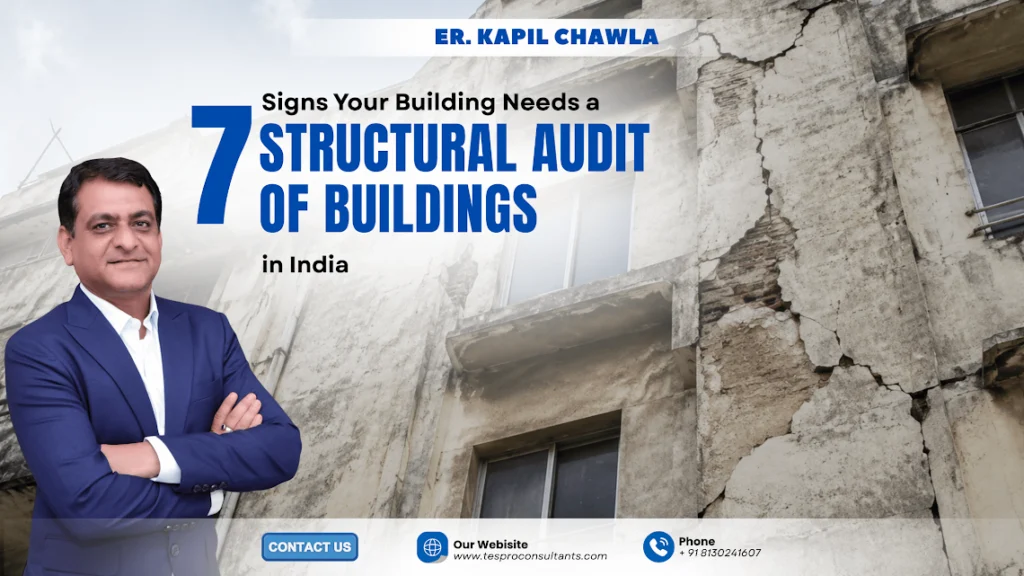
7 Signs Your Building Needs a Structural Audit of Buildings in India 

Buildings face continuous pressure from weather, load, moisture, ageing, and nearby construction activities. Over time, these factors can reduce structural strength and create safety risks. That is why a proper structural audit of buildings in India has become important for residential, commercial, and industrial properties. A professional building structure audit helps engineers identify hidden damage, check load-bearing capacity, and recommend repair solutions before problems become serious. Through proper building safety inspection and technical analysis, property owners can maintain structural stability and avoid major repair costs. In many cases, expert building inspection services also help in obtaining a valid structural stability certificate for legal and safety purposes. Why Identifying Structural Warning Signs Is Important 7 Signs Your Building Needs a Structural Audit Small structural problems often become serious if ignored. These warning signs indicate the need for professional inspection and evaluation. 1. Visible Cracks in Walls and Ceilings A professional structural damage inspection in India helps identify the root cause 2. Water Leakage and Dampness Problems 3. Rusting of Steel Reinforcement 4. Uneven Floors or Tilting Structure Immediate building inspection services are necessary in such conditions 5. Old Age of the Building 6. Frequent Repairs and Maintenance Issues 7. Natural Disaster or Nearby Construction Impact Benefits of Structural Audit of Buildings in India For reliable structural audit of buildings in India, detailed engineering analysis, and expert guidance, property owners can consult Er. Kapil Chawla of TESPRO Consultants. His expertise in structural assessment, safety evaluation, and repair recommendations helps ensure safer and stronger buildings across India. Explore more: If planning to build your dream home?Check out Eternal Foundations—a helpful guide to building a strong, safe home that lasts for generations.📩 For a free e-book, email me at kapil.chawla@tesproconsultants.com


Periodic Structural Health Assessment (SHA) in India: Current Scenario, Challenges, and the Way Forward

India’s built environment is at a critical juncture. While new construction continues at an unprecedented pace, a vast portion of existing buildings and infrastructure is steadily ageing. Residential societies, commercial complexes, hospitals, factories, and public buildings constructed decades ago are now operating far beyond their originally envisioned service conditions. In this context, Periodic Structural Health Assessment (SHA) has emerged as a vital tool to ensure safety, durability, and sustainability—but its adoption in India remains uneven and largely reactive. Understanding Structural Health Assessment Structural Health Assessment is a systematic evaluation of a structure’s current condition, load-carrying capacity, and remaining service life. It combines visual inspections, non destructive testing (NDT), selective destructive testing, and structural analysis to identify distress mechanisms such as cracking, corrosion, material degradation, overloading, or foundation issues. Unlike one-time inspections carried out after damage becomes visible, periodic SHA is preventive in nature. It enables stakeholders to detect early-stage problems, plan maintenance, and avoid sudden failures or expensive emergency repairs. Ageing Infrastructure: The Indian Reality A large percentage of buildings in Indian cities are 30–60 years old, particularly in metro regions. Many of these structures were designed: Over time, environmental exposure—humidity, pollution, salinity in coastal areas, and temperature variations—accelerates deterioration. Yet, routine health checks of buildings, including a building safety inspection, are still not a standard practice across the country. Regulatory Scenario in India India does not yet have a uniform national mandate requiring periodic SHA for all buildings. Some municipal corporations, especially in large cities, have introduced compulsory structural audit of buildings above a certain age. However, enforcement and technical depth vary widely. National codes published by the Bureau of Indian Standards guide durability, maintenance, and safety evaluation, but these are often treated as recommendations rather than enforceable requirements for existing structures. As a result, SHA is frequently carried out only when: Typical Triggers for SHA in India In practical terms, most SHAs in India are initiated due to: Preventive, scheduled assessments—similar to annual medical check-ups—are still rare, particularly in private residential buildings. Key Components of SHA in the Indian Context A comprehensive structural health assessment typically includes: In some cases, a structural stability certificate may also be issued following a detailed assessment. Challenges Limiting Effective SHA Adoption Despite growing awareness, several challenges persist: Changing Trends and Growing Importance The scenario is gradually evolving. Increased reporting of building failures, growing litigation, and awareness among housing societies are pushing SHA into focus. Infrastructure projects—metros, bridges, highways, and public utilities—are now routinely subjected to periodic health monitoring. Additionally, sustainability goals and life-cycle cost optimization are driving asset owners to recognize that maintaining existing structures is often more economical and environmentally responsible than demolition and reconstruction. The Way Forward for India For Structural Health Assessment to become an integral part of India’s construction ecosystem: Conclusion In India, Structural Health Assessment is transitioning from an optional exercise to a critical necessity. As cities grow denser and buildings age, safety can no longer depend on visual judgment alone. Periodic SHA provides the technical insight needed to protect lives, preserve assets, and ensure sustainable urban development. Strong structures are not just designed and built—they are continuously assessed and responsibly maintained. Explore more: If planning to build your dream home?Check out Eternal Foundations—a helpful guide to building a strong, safe home that lasts for generations.📩 For a free e-book, email me at kapil.chawla@tesproconsultants.com

Precautions from Structural Engineering Aspects for Extension of an Additional Floor Above a 70-Year-Old Building

In India, many residential and commercial buildings constructed 60–80 years ago were designed with very limited codes, materials, and loading assumptions. Today, due to space constraints and rising land costs, owners often propose adding one more floor over such old structures. This requires proper structural engineering and a qualified structural engineer to ensure safety. However, vertical extension over a 70-year-old building is a high-risk activity if not handled scientifically. Structural stability certificate and non destructive testing must be done. Structural engineering ensures safety is prioritized over cost and convenience. Below are the critical structural engineering precautions that must be followed before approving any additional floor. Proper structural testing and non destructive testing for buildings should always be conducted. 1. Understand the Original Structural System Most buildings constructed 70 years ago were: Before any extension: Assumption-based design is dangerous for old buildings. A structural engineer should supervise structural testing. 2. Mandatory Structural Health Assessment A detailed Structural Audit is non-negotiable. This includes: Purpose: Structural engineering and a qualified structural engineer are essential for supervision. 3. Check Foundation Capacity First In most cases, the foundation governs the feasibility of adding an extra floor. Key checks: If the foundation is already overstressed, structural engineering evaluation and structural testing indicate whether strengthening is necessary. Non destructive testing can reveal hidden weaknesses. 4. Load Assessment and Compatibility Additional floor introduces: A structural engineer must: Old buildings were never designed for future expansion. Structural engineering and non destructive testing for buildings are critical for safe load assessment. 5. Seismic Safety Is Critical Most 70-year-old buildings: Adding height: Seismic evaluation and retrofitting (if required) must be done before extension. Structural engineering, structural testing, and non destructive testing ensure compliance. 6. Strengthening Measures (If Required) If analysis shows inadequacy, strengthening options may include: Strengthening must be: Structural engineering expertise and a structural stability certificate are mandatory. 7. Construction Methodology Matters Even a safe design can fail due to poor execution. Key precautions: Many failures occur during construction, not after completion. Proper structural engineering practices and non destructive testing for buildings reduce these risks. A qualified structural engineer should oversee. 8. Legal and Professional Responsibility Adding a floor without structural approval can lead to: Always ensure: Structural engineering and structural testing are necessary for legal and professional safety. Conclusion Extending a floor above a 70-year-old building is not a routine renovation—it is a structural intervention. If any of these steps are skipped, the risk multiplies exponentially. Non destructive testing for buildings and proper structural engineering review ensure safety. Remember: Buildings can be repaired, but human lives cannot. Explore more: If planning to build your dream home?Check out Eternal Foundations—a helpful guide to building a strong, safe home that lasts for generations.📩 For a free e-book, email me at kapil.chawla@tesproconsultants.com