
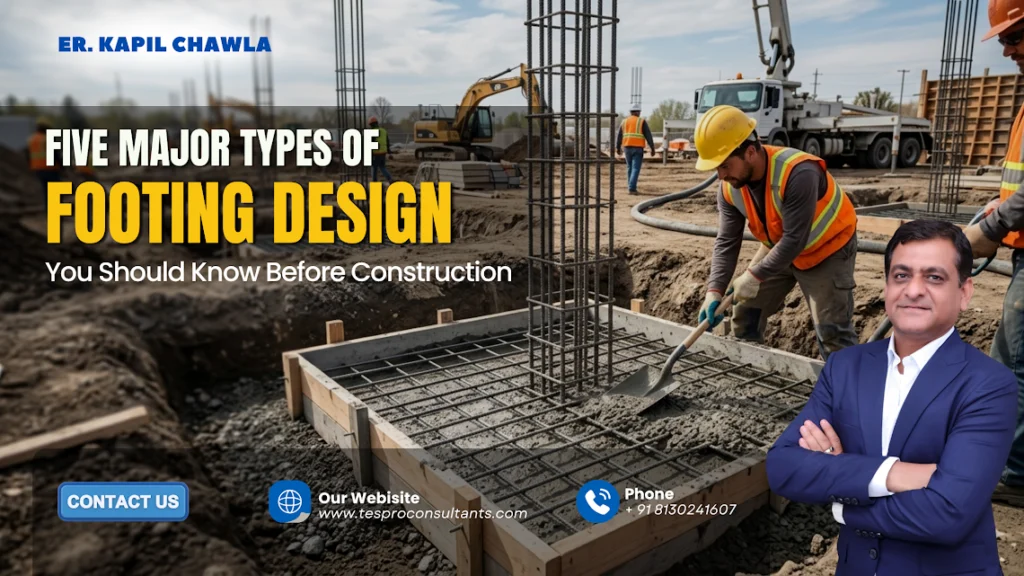
Five Major Types of Footing Design You Should Know Before Construction
Before starting any construction, it is important to understand the types of footing design, because a strong base supports the entire structure. The footing is the lowest part of the building, so it transfers the load safely to the soil. Many people ask what the purpose of footing in construction is, and the simple answer is stability and safety. Also, knowing foundation design basics helps in choosing the right type. Engineers focus on structural foundation design to avoid cracks and failure, and systems like raft footing design or isolated footing design are selected based on site needs. Key Factors Engineers Check Before Choosing Footing Engineers follow a practical approach because the correct selection reduces risk and cost. They study types of footing design using foundation design basics and apply proper structural foundation design rules. Also, understanding the purpose of footing in construction helps in making better decisions, and options like raft footing design and isolated footing design are chosen based on these factors. Five Major Types of Footing Design Explained There are five main types of footing design, and each one is used for different site and load conditions. So, engineers select based on foundation design basics and project needs. Isolated Footing (Single Column Support) Combined Footing (Two Columns Together) Strip Footing (Wall Support) Raft (Mat) Footing (Full Area Coverage) Pile Footing (Deep Foundation) All of these are part of structural foundation design, and understanding the purpose of footings in construction helps select the right one. Comparison Between Different Footing Types Below is a simple comparison table to help you clearly understand the different types of footing and structural foundation design principles. Footing Type Load Capacity Soil Suitability Cost Level Complexity Isolated Footing Low to Medium Strong soil Low Simple Combined Footing Medium Medium soil Medium Moderate Strip Footing Medium Uniform soil Low Simple Raft Footing High Weak soil High Complex Pile Footing Very High Very weak soil Very High Highly Complex This comparison shows why knowing what the purpose of footing in construction is is important, because engineers choose between options like raft footing design and isolated footing design based on project needs. When Do You Need Expert Structural Consultation? You should consult experts early so that mistakes can be avoided and safety can be improved. Professionals follow major types of footing design with strong foundation design basics and accurate structural foundation design. Expert Guidance You Can Trust For safe and reliable construction, connect with Er. Kapil Chawla from TESPRO Consultants. He provides practical solutions in structural design, so your project stays strong, stable, and cost-efficient. Explore more: If planning to build your dream home?Check out Eternal Foundations—a helpful guide to building a strong, safe home that lasts for generations.📩 For a free e-book, email me at kapil.chawla@tesproconsultants.com