
tespro consultants

Structural Design Optimization

structural-design-consultants-in-delhi

5 Smart Methods by Structural Design Consultants in Delhi to Strengthen Old Buildings 

Old buildings often face problems like cracks, weak foundations, water damage, and reduced load capacity. Because of this, timely strengthening becomes important for safety and long-term use. Today, many property owners across India are taking help from structural design consultants in Delhi to improve the strength and stability of old structures. With proper structural design methodology, engineers can identify weak areas and apply the right repair methods without damaging the complete building. Modern engineering practices, updated structural design codes, and even AI in structural design are now helping consultants make better, faster decisions for renovation projects involving old buildings. 5 Smart Methods to Strengthen Old Buildings Strengthening an old building is not only about repairs. It also includes proper planning, load checking, foundation analysis, and safety improvements. Below are five practical methods used by structural design consultants in Delhi for structural strengthening projects across residential, commercial, and industrial buildings in India. 1. Structural Audit and Load Analysis of the Building 2. Retrofitting Weak Columns and Beams 3. Foundation Strengthening for Better Stability 4. Waterproofing and Corrosion Protection Techniques 5. Seismic Retrofitting for Earthquake Resistance Common Signs Your Old Building Needs Structural Strengthening Why Hire Professional Structural Design Consultants in Delhi Er. Kapil Chawla is an experienced structural design consultants in Delhi of TESPRO Consultants, providing reliable structural engineering solutions for old buildings across India. His team focuses on safe design practices, structural strengthening, stability analysis, and practical engineering-based renovation methods. Explore more: If planning to build your dream home?Check out Eternal Foundations—a helpful guide to building a strong, safe home that lasts for generations.📩 For a free e-book, email me at kapil.chawla@tesproconsultants.com
Structural Design Methodology: Expert Insights from Structural Engineer in Gurugram

Our structural design methodology is built on a foundation of engineering rigour, code compliance, and practical constructability by a structural engineer in Gurugram and across India, aligned with the engineering design process. We adopt a systematic and analytical approach to ensure that every structure is safe, durable, and optimized for performance and cost efficiency. Design Philosophy Our approach to structural design is governed by the following principles of a structural engineer in Gurugram, supported by effective structural planning: Safety and Reliability All structures are designed to safely resist applied loads and environmental forces throughout their service life, ensuring strong structural analysis Serviceability and Performance Designs are checked for deflection, cracking, and vibration to ensure long-term usability and comfort, based on the structural system of a building. Economy and Optimization Efficient use of materials such as concrete and steel to achieve cost-effective solutions without compromising safety through structural design optimization. Constructability Designs are developed keeping in mind ease of execution, site conditions, and construction practices, following a robust engineering design process. Codes and Standards All structural designs are carried out in accordance with relevant Indian Standard codes and, where required, international best practices by a structural engineer in Gurugram and across India, ensuring compliance within the structural design methodology, including: Design Approach 1. Conceptual Structural Planning At the initial stage, an efficient structural system of a building is developed in coordination with architectural layouts by a structural engineer in Gurugram. Key considerations include: This stage establishes the foundation for an efficient and economical design through proper structural planning. 2. Load Assessment and Criteria Definition All relevant loads are evaluated based on project location and usage as part of the engineering design process: Design criteria such as load combinations, design life, and performance requirements are defined at this stage using detailed structural analysis. 3. Structural Analysis The structural system is analyzed using advanced engineering software to determine by a structural engineer: Both linear and, where required, advanced analysis techniques are adopted for accurate results within the structural design methodology. 4. Member Design and Detailing All structural components are designed to satisfy strength and serviceability requirements using structural design optimization, including: Detailed reinforcement and connection design ensure safe load transfer and durability within the defined structural system of a building. 5. Design for Durability Durability considerations are incorporated to enhance the lifespan of the structure through proper structural planning: 6. Design Optimization Design iterations are carried out to achieve structural design optimization: This results in economical and sustainable structural solutions aligned with the engineering design process. 7. Preparation of Detailed Drawings Comprehensive structural drawings and documents are prepared by a structural engineer in Gurugram and across India, including: These drawings ensure clarity and precision during construction execution and support effective structural analysis. 8. Coordination and Review Continuous coordination is maintained with teams following the structural design methodology: This ensures seamless integration of structural design with other disciplines and avoids conflicts during execution through efficient structural planning. 9. Construction Stage Support During the construction phase, we provide support as a structural engineer in Gurugram and all over India, ensuring accuracy in the structural system of a building: This ensures that the design intent is maintained throughout execution using proper structural analysis. Explore more: If planning to build your dream home?Check out Eternal Foundations—a helpful guide to building a strong, safe home that lasts for generations.📩 For a free e-book, email me at kapil.chawla@tesproconsultants.com

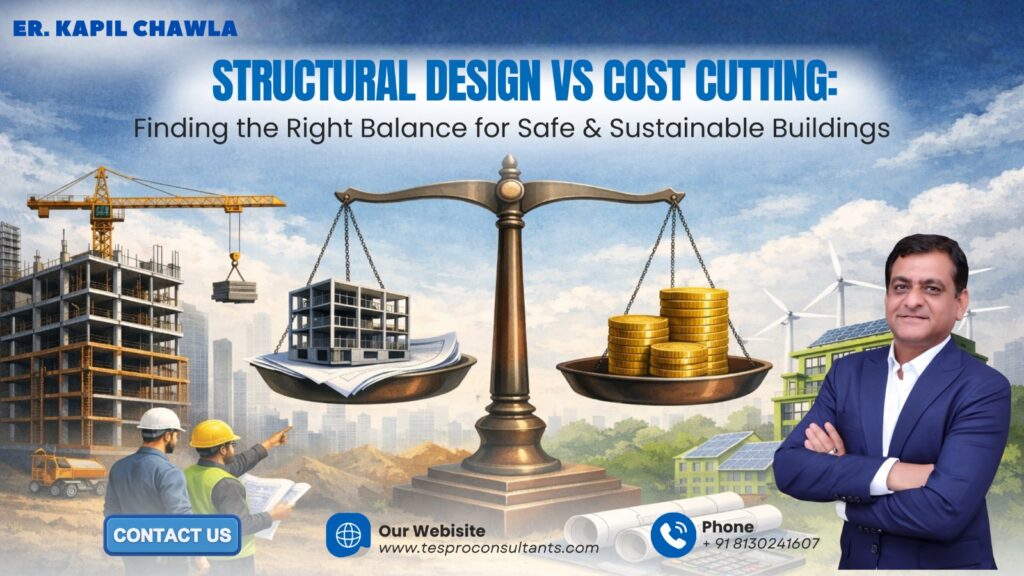
Structural Design vs Cost Cutting: Finding the Right Balance for Safe & Sustainable Buildings

In today’s competitive construction environment, cost-cutting often becomes a primary focus. While controlling project budgets is important, confusing cost-cutting with efficient structural design can lead to serious consequences—from safety risks to long-term financial losses. Understanding the difference between the two is critical for developers, builders, and homeowners alike, especially when considering cost optimization in construction strategies. What Is Structural Design? Structural design is the engineering process of creating a safe, durable, and efficient load-resisting system for a building. Proper structural design building planning ensure stability and performance throughout its lifecycle. It considers: A well-designed structure is not about over-design or under-design—it is about right structure design. What Is Cost Cutting in Construction? Cost-cutting typically involves reducing upfront expenses, often by ignoring proper structural design optimization principles and instead: While this may show immediate savings on paper, it often leads to hidden and recurring costs later, especially when structural safety assessment is overlooked. Structural Design Is Not Cost-Cutting—It Is Cost Optimization A common misconception is that a “cheaper structure” is a “better structure.” In reality, true structure design focuses on engineering accuracy and long-term efficiency. Structural Design Cost Cutting Based on engineering calculations Based on assumptions Optimizes material usage Reduces material blindly Ensures safety & code compliance Often compromises safety Low maintenance over lifecycle High repair & retrofitting costs Long-term value Short-term savings Good structure design actually saves money—not by reducing safety, but by eliminating inefficiencies through proper structural safety assessment and planning. The Hidden Cost of Poor Design Decisions When cost-cutting overrides structural logic and ignores professional structure design practices, projects may face: In seismic zones or industrial structures, such compromises can be catastrophic if structural design codes are not properly followed. Smart Structural Design: Where Savings Truly Come From Experienced structural engineers achieve economy through effective structural design optimization, including: These measures often reduce steel and concrete quantities naturally, supporting cost optimization in construction without risking performance. A Strong Structure Is an Investment, Not an Expense A building stands for decades. Saving a small percentage during construction by weakening structural intent instead of investing in proper structure design can result in multiple times the cost in repairs, retrofits, and downtime later. The cheapest structure is often the most expensive one in the long run, especially when structural design building fundamentals are ignored. Final Thoughts Structure design and cost-cutting are not opposing concepts, but they must be clearly distinguished. Choosing the right structural engineer ensures your project is economical, safe, and future-ready—backed by proper structural safety assessment and compliance with structural design codes. If you’re planning a new project or reviewing an existing structure, invest in proper structure design—not shortcuts. A strong structure design today ensures peace of mind and savings tomorrow. Need help with value engineering, structural audits, or optimized designs? Let’s build smart, safe, and sustainable with the right structure design approach. Explore more: If planning to build your dream home?Check out Eternal Foundations—a helpful guide to building a strong, safe home that lasts for generations.📩 For a free e-book, email me at kapil.chawla@tesproconsultants.com