

tespro consultants

Soil Testing for House Construction

5 Things You Must Check Before Starting House Construction

Starting a house without proper technical checks can lead to serious problems later. Many people focus only on design and cost, but real safety starts from ground-level planning. So, before starting house construction, every step must be checked carefully. Because of that, engineers follow a clear system that includes soil study, design control, and material selection. Also, proper planning ensures long-term safety, stability, and cost control. 5 Key Checks Before You Begin Construction Before starting house construction, there are five important checks that every site must follow. These steps help in safe design, proper execution, and long-term structural strength. However, skipping even one step can create serious risks in future building performance. 1. Site Investigation and Soil Testing (Most Critical Step) So, soil study is the first step because foundation strength depends on it. However, if ignored, it may lead to structural instability. 2. Legal Approvals and Code Compliance Also, approvals are important because they ensure safe and legal construction. Therefore, engineers always confirm compliance before starting work. 3. Structural Design Planning (Beam, Column & Load System) Because of that, strong design avoids future cracks and failures. However, poor design can directly affect building safety. 4. Budget Planning and Material Estimation So, financial planning helps avoid delays and stress. In addition, it keeps construction under control from start to finish. 5. Material Selection and Quality Control Also, good materials directly improve building life. Therefore, quality control is very important in every stage of work. Role of the Structural Engineer in the Entire Process Moreover, engineers reduce risk and improve the strength of the structure. So, their role is important from design to completion. Pre-Construction Final Checklist  However, this final check ensures that everything is technically correct before work begins. Because of that, construction becomes smooth and safe. Final Pre-Construction Checklist In addition, this step ensures no confusion during execution. So, every activity starts with proper clarity and control. Final Execution Readiness Checklist Therefore, this stage confirms full readiness for construction. Also, it reduces mistakes and improves project efficiency. Last Check Before Construction Starts So, before starting house construction, this final check ensures everything is safe and aligned with engineering standards. For safe and strong home construction, expert guidance is very important. Er. Kapil Chawla of TESPRO Consultants provides professional structural design, ensures strict IS codes for building construction compliance, and guides every step to help you build a safe, durable, and technically strong home with confidence. Explore more: If planning to build your dream home?Check out Eternal Foundations—a helpful guide to building a strong, safe home that lasts for generations. 📩 For a free e-book, email me at kapil.chawla@tesproconsultants.com
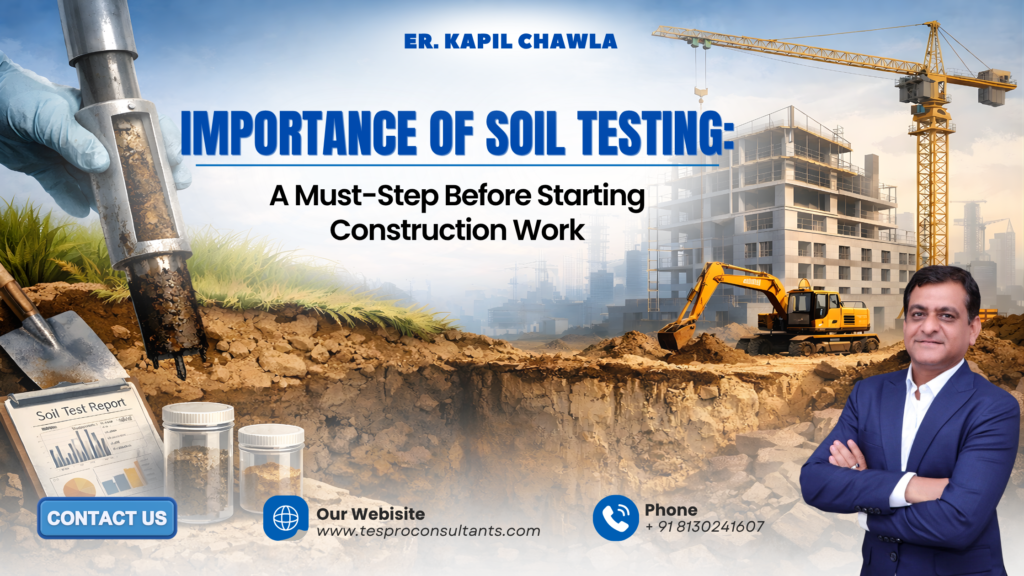
Importance of Soil Testing: A Must Step Before Starting Construction Work

Before starting any project, it is very important to understand the ground conditions because the entire structure depends on them. The importance of soil testing lies in checking whether the soil can safely carry the load of a building or not. So, engineers first study the soil before any design work begins. Also, this step helps in avoiding future problems like cracks, settlement, or foundation failure. In simple words, without proper testing, construction becomes risky and uncertain. Moreover, every site has different soil behaviour, so one standard design cannot work everywhere. This is the importance of soil testing. Why Soil Testing is Essential in Construction Projects Soil testing plays an important part in ensuring not only the structural integrity of buildings and other structures, but also how much weight/load can be placed on those grounds safely. Furthermore, if a site has weak soil, provide additional design support so that the design does not fail. So, the role of soil testing for construction is very important. Key points include: Therefore, proper testing is not optional but necessary. In addition, the importance of soil testing provides clear data to support safe engineering decisions. So, every project should start with soil analysis for better results. Key Soil Properties Engineers Analyze Engineers carefully study different soil features before designing because foundation safety depends on it. The focus on types of soil for foundation helps in selecting the correct construction method. Also, each soil type reacts differently under load, so proper classification is required. Soil Property What It Means Why It Matters Bearing Capacity Load soil can support Prevents sinking Moisture Content Water in soil Affects stability Soil Density Compactness of soil Improves strength Shear Strength Resistance to sliding Avoids collapse Permeability Water flow rate Controls drainage Moreover, engineers also check compaction level and soil movement. However, if these properties are ignored, structural safety can be affected. Types of Soil Tests Used in Construction Projects Different tests are performed to understand soil behaviour properly, and this is known as types of soil testing. Also, each test gives specific data that helps in safe design planning. So, engineers choose tests based on project size and soil condition. Common soil tests include: Moreover, lab tests and field tests are often combined for better accuracy. However, skipping any important test can lead to wrong assumptions. Expert Opinion on Soil Safety in Construction According to experts, proper ground analysis is the basis of safe engineering design. The concept of soil for building construction is critical because even strong structures fail on weak soil. Also, engineers recommend testing before every major project because soil conditions can change from one site to another. Risks of Ignoring Soil Investigation Before Building Ignoring proper checks during soil testing for house construction can create serious structural problems later. Also, many failures in buildings happen because soil conditions were not studied properly in the beginning. So, understanding risks is very important before starting work. Major risks include: Moreover, poor soil knowledge can reduce building life. However, proper testing prevents all these issues easily. Therefore, engineers always recommend soil analysis before design approval. TESPRO Consultants provides professional soil investigation services under the guidance of Er. Kapil Chawla and explain the importance of soil testing. With accurate testing methods and field expertise, he ensures safe foundation planning and strong construction outcomes for every project with precision and care. Explore more: If planning to build your dream home?Check out Eternal Foundations—a helpful guide to building a strong, safe home that lasts for generations. 📩 For a free e-book, email me at kapil.chawla@tesproconsultants.com

Increasing Awareness in Structural Engineering for Small Home Owners

In India, home construction is not a frequent activity, especially in indian home construction practices. For most families, it is a once-in-a-lifetime investment built with years of savings, dreams, and emotions attached to it. However, while people spend considerable time selecting tiles, paint colours, and interiors, the role of structural engineering and overall structural engineering in ensuring safety is often ignored, and the structural safety of the house receives the least attention. This lack of awareness can lead to serious long-term risks and highlights the importance of structural design. Why Structural Engineering Matters for Small Houses There is a common misconception that structural engineering and structural engineers are required only for high-rise buildings or large commercial projects. In reality, small residential houses are more vulnerable because: A structural engineering professional ensures that the building can safely carry its own weight, live loads, and resist natural forces like earthquakes and wind. Home Construction Is a One-Time Decision Unlike commercial projects, where design and construction teams are experienced, individual homeowners depend heavily on contractors and local practices. Any error in foundation, column sizing, or reinforcement detailing becomes extremely expensive—or sometimes impossible—to rectify later without safe structural design principles. A structurally weak building may not fail immediately, but it slowly loses its strength, leading to: Common Myths Among Home Owners 1. “Using more steel makes the building safer” Safety does not come from quantity alone. Proper design, detailing, and placement of reinforcement based on structural engineering principles are far more important than excess steel. 2. “My neighbour’s design worked, so it will work for me” Soil conditions, plot size, and loading patterns vary even within the same locality. Copying designs without professional structural engineering input is one of the most common and dangerous practices. 3. “Soil testing is optional” Soil testing forms the foundation of safe construction. Without knowing soil bearing capacity, foundation design becomes guesswork and increases structural risk. The Hidden Risks in Small Residential Buildings Many issues remain hidden behind plaster and finishes: These deficiencies may not be visible, but significantly reduce the building’s safety margin. What a Structural Engineer Actually Does A qualified structural engineer: Their role is not limited to drawings; it is about risk mitigation and safety assurance. Cost vs Long-Term Value Structural design fees typically account for only 1–2% of the total construction cost, yet they directly influence: Skipping professional structural input may appear economical initially, but it often results in higher costs later. Role of Awareness in Building Safer Homes An aware homeowner asks the right questions: Awareness empowers homeowners to demand quality and accountability in construction decisions. Conclusion Structural engineering is not a luxury reserved for large projects. Every home, irrespective of size, deserves a safe and well-engineered structure. Increasing awareness among small homeowners is essential for building resilient communities and reducing avoidable construction failures. A strong home begins with informed decisions. Explore more: If planning to build your dream home?Check out Eternal Foundations—a helpful guide to building a strong, safe home that lasts for generations.📩 For a free e-book, email me at kapil.chawla@tesproconsultants.com