
tespro consultants

Building Structure Audit

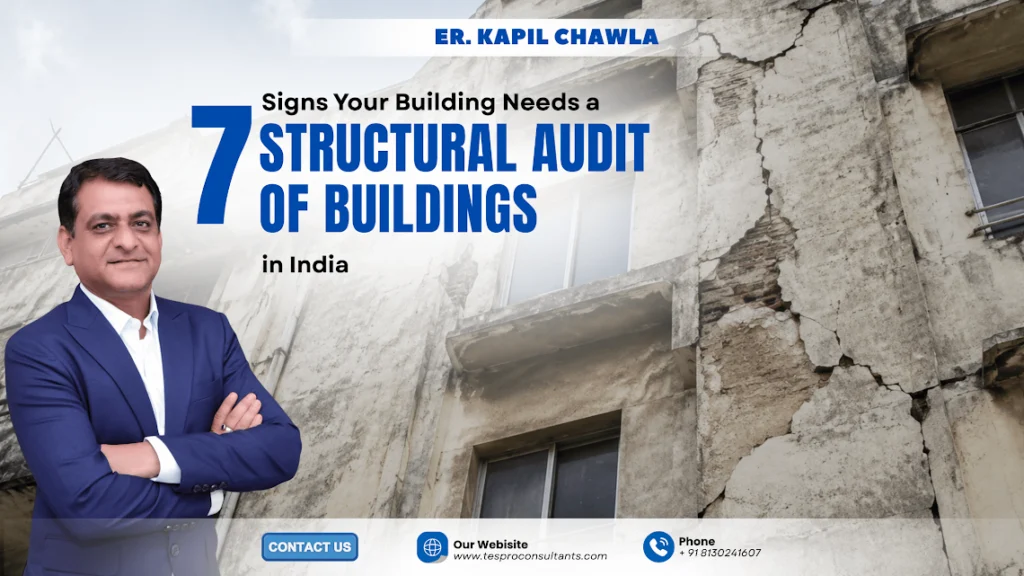
7 Signs Your Building Needs a Structural Audit of Buildings in India 

Buildings face continuous pressure from weather, load, moisture, ageing, and nearby construction activities. Over time, these factors can reduce structural strength and create safety risks. That is why a proper structural audit of buildings in India has become important for residential, commercial, and industrial properties. A professional building structure audit helps engineers identify hidden damage, check load-bearing capacity, and recommend repair solutions before problems become serious. Through proper building safety inspection and technical analysis, property owners can maintain structural stability and avoid major repair costs. In many cases, expert building inspection services also help in obtaining a valid structural stability certificate for legal and safety purposes. Why Identifying Structural Warning Signs Is Important 7 Signs Your Building Needs a Structural Audit Small structural problems often become serious if ignored. These warning signs indicate the need for professional inspection and evaluation. 1. Visible Cracks in Walls and Ceilings A professional structural damage inspection in India helps identify the root cause 2. Water Leakage and Dampness Problems 3. Rusting of Steel Reinforcement 4. Uneven Floors or Tilting Structure Immediate building inspection services are necessary in such conditions 5. Old Age of the Building 6. Frequent Repairs and Maintenance Issues 7. Natural Disaster or Nearby Construction Impact Benefits of Structural Audit of Buildings in India For reliable structural audit of buildings in India, detailed engineering analysis, and expert guidance, property owners can consult Er. Kapil Chawla of TESPRO Consultants. His expertise in structural assessment, safety evaluation, and repair recommendations helps ensure safer and stronger buildings across India. Explore more: If planning to build your dream home?Check out Eternal Foundations—a helpful guide to building a strong, safe home that lasts for generations.📩 For a free e-book, email me at kapil.chawla@tesproconsultants.com
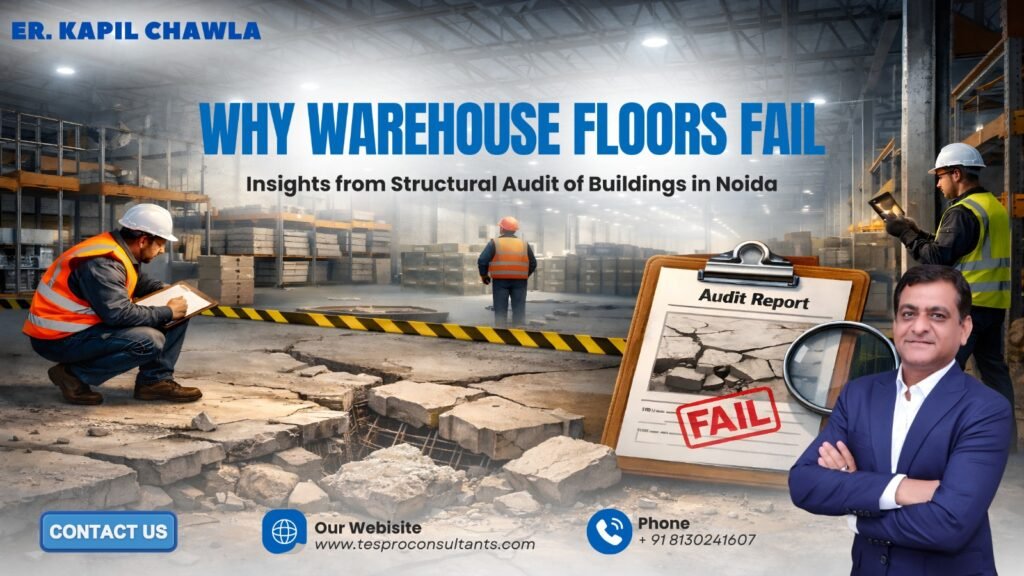

Why Warehouse Floors Fail – Insights from Structural Audit of Buildings in Noida

Warehouse floors are designed to withstand heavy loads, continuous movement of forklifts, pallet trucks, and storage racks. Yet, flooring deterioration is one of the most common issues observed during structural audits of industrial buildings in Noida. Cracks, surface dusting, joint failures, and settlement are often ignored initially — but if left unattended, they can lead to operational disruptions, safety hazards, and expensive repairs. This is where a structural audit of buildings in Noida can help identify early signs of damage. Let us understand the major causes. 1. Overloading Beyond Design Capacity Many warehouses change usage over time. Storage loads increase, racking systems become heavier, or machinery is added. If the floor was originally designed for lower loads and is now subjected to: It can lead to cracking, settlement, and joint failure. A structural audit of buildings in Noida can identify these issues before they escalate. Lesson: Floor design load must match operational reality. A structural health assessment helps ensure the load capacity is adequate for current usage. 2. Poor Subgrade Preparation A concrete floor is only as strong as the soil beneath it. Structural safety assessments often reveal issues related to improper subgrade preparation. Common issues include: This results in differential settlement and cracks across the slab. During audits, subgrade failure is one of the most overlooked causes. 3. Inadequate Floor Thickness In heavy-duty warehouses, slab thickness is critical. A structural audit of buildings in Noida often focuses on ensuring that slab thickness meets the required specifications. If the slab thickness is insufficient: Proper design must consider wheel load analysis, impact factors, and load repetitions. 4. Improper Concrete Mix or Poor Workmanship Floor performance heavily depends on concrete quality. During a structural assessment of existing buildings, improper concrete mix or poor workmanship is often identified as a major issue. Common issues include: This leads to surface dusting, abrasion, and reduced durability, which are identified during a building structure audit. 5. Joint Failure and Spalling Warehouse floors contain construction and expansion joints. Structural engineers in Noida often highlight issues related to joint failure in their assessments. Due to: Edges start breaking (spalling), creating operational hazards. Joint distress is often the first visible sign of flooring failure, which is identified during a structural audit of buildings in Noida. 6. Surface Abrasion Continuous forklift movement causes: If a floor hardener was not used or finishing was poor, surface deterioration accelerates. A structural audit of buildings in Noida can detect this problem early. 7. Moisture and Chemical Exposure Absence of vapor barrier can cause: Chemical spills (oils, acids, salts) can further degrade concrete over time. A structural health assessment helps identify moisture-related issues that may affect the integrity of the flooring. 8. Poor Drainage and Water Accumulation Water stagnation softens the subgrade and reduces bearing capacity. This ultimately leads to slab settlement and cracking. Structural safety assessments often uncover poor drainage systems contributing to floor damage. Why Early Assessment Is Critical Warehouse flooring issues are not just cosmetic problems. They can lead to: A professional structural assessment helps identify: Final Thoughts Warehouse flooring deterioration is usually not due to one single cause — it is a combination of design, construction quality, soil behaviour, and operational loading. Regular structural audits of buildings in Noida are essential for identifying issues before they cause significant damage. Periodic structural inspection and load verification can significantly extend the life of industrial flooring systems, ensuring structural integrity and operational efficiency. Explore more: If planning to build your dream home?Check out Eternal Foundations—a helpful guide to building a strong, safe home that lasts for generations.📩 For a free e-book, email me at kapil.chawla@tesproconsultants.com

Prerequisites Before Proceeding with a Building Structure Audit

A building structure audit is a critical exercise to assess the safety, serviceability, and remaining life of a structure. It provides insights into structural stability and helps plan building maintenance and repair effectively. However, the accuracy and usefulness of an audit largely depend on the pre-audit preparedness. Without proper inputs and planning, even a detailed audit may lead to incomplete or misleading conclusions. Outlined below are the key prerequisites that must be ensured before initiating a building structure audit. 1. Availability of Structural Drawings and Documents Before a site inspection, all relevant technical documents should be collected and reviewed, including These documents help the structural engineer understand the design intent, load path, and structural system. Proper documentation also guides decisions about concrete testing methods during the audit. 2. Basic Information of the Building Essential building details must be established prior to the audit: Changes in building usage often introduce loads beyond the original design capacity. Knowing these details helps in evaluating structural defects in buildings accurately. 3. Identification of Visible Distress A preliminary visual survey forms the foundation of any building structure audit. Key observations include: Identifying visible distress early guides the scope and location of further testing and helps plan corrective measures for building maintenance and repair. 4. Site Accessibility and Readiness The audit team must have safe and adequate access to all critical areas, such as: Restricted access can lead to incomplete assessment, potentially overlooking critical structural defects in buildings. 5. Utility and Safety Arrangements Proper site arrangements should be ensured before testing: Safety of personnel is a non-negotiable prerequisite. Additionally, proper setup ensures accurate implementation of concrete testing methods and other structural evaluations. 6. Clarity on Audit Scope The scope of the structure audit must be clearly defined at the outset: Clear scope avoids ambiguity and ensures the audit can support structural health monitoring efforts where needed. 7. Purpose and Client Expectations Understanding the objective of the audit is essential: Timeline, reporting format, and deliverables should be mutually agreed upon. A well-defined objective enhances the reliability of the building structure audit outcomes. Conclusion A building structure audit is not merely an inspection—it is a systematic engineering evaluation. Proper prerequisites ensure: By integrating concrete testing methods, detecting structural defects in buildings, and supporting structural health monitoring, a well-prepared audit leads to dependable insights for building maintenance and repair. A thorough building structure audit provides stakeholders with confidence in the safety and longevity of the structure.