tespro consultants

Uncategorized

Civil Engineering Structural Design: Techniques to Prevent Structural Failures

Every building, bridge, or tower we see today is the result of careful planning and smart execution. But if that planning is weak, structures can fail and cause damage. That is why civil engineering structural design plays a vital role in making projects safe, long-lasting, and reliable. It involves analysing loads, materials, and construction methods so that every structure can stand strong. Because of that, businesses and individuals often depend on experts who provide structural engineering design services for projects of all sizes. In addition, choosing the right structural design companies makes the difference between a structure that stands tall and one that risks failure. Why Structural Failures Happen in Civil Engineering Projects?  Failures do not happen by chance, but often because of mistakes that could have been avoided. In civil projects, weak planning or poor supervision can lead to unsafe results. Here are some common reasons: Role of Civil Engineering Structural Design in Safety and Stability Safe and stable structures are not accidents; they are the result of science and planning. The role of civil engineering structural design in keeping people safe is vital. Some key roles include: Techniques to Prevent Structural Failures in Civil Engineering Sustainable and Innovative Approaches in Structural Design Modern design is not only about strength but also about being eco-friendly and efficient. Engineers are using innovative methods that save energy and reduce waste. Some of these are: Benefits of Applying Preventive Structural Design Techniques When preventive techniques are applied, the benefits are not just technical but also financial and social. Choosing the right partner, like Tespro Consultants, makes these benefits even stronger: Explore more: If planning to build your dream home?Check out Eternal Foundations—a helpful guide to building a strong, safe home that lasts for generations. 📩 For a free e-book, email me at kapil.chawla@tesproconsultants.com

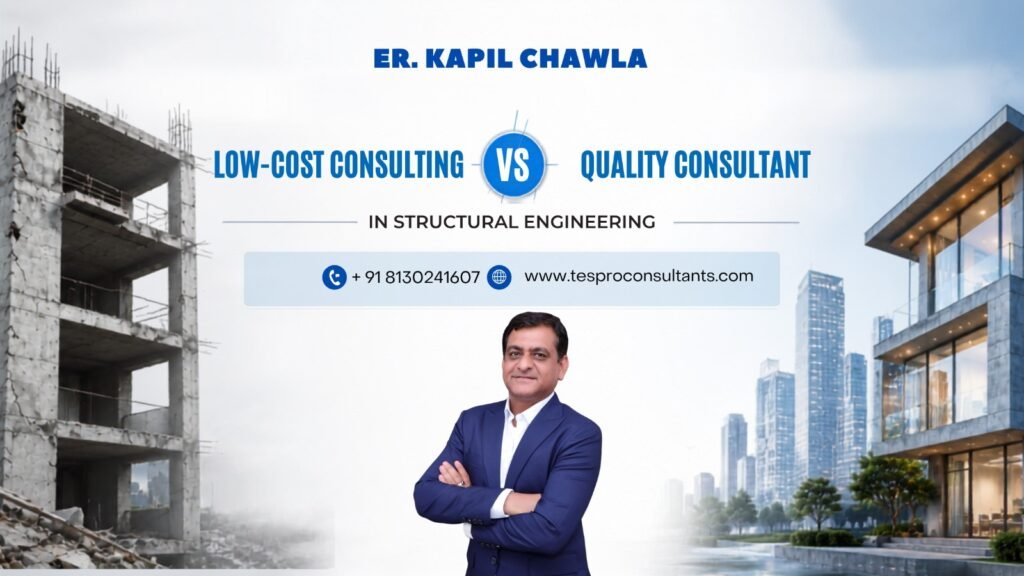
Low-Cost Consulting vs Quality Consultant in Structural Engineering

Why the Cheapest Option May Cost You the Most in the Long Run In the world of construction and infrastructure, structural engineering forms the backbone of every project. From homes to industries, a structure’s strength, stability, and safety rely on the quality of its engineering. However, one common dilemma faced by clients and developers today isShould we choose a low-cost consultant or invest in a quality structural design engineer? A cheaper quote may seem appealing, but in structural design, real costs often emerge later during construction or maintenance. The Illusion of Low-Cost Consulting A low-cost consultant typically reduces fees by compromising on one or more of the following: What looks like “savings” on paper often results in: In short, the client ends up paying significantly more during construction or operation than what was saved on consulting fees. The Value of a Quality Consultant A quality structural design engineer focuses on performance, efficiency, and durability, not just numbers on a quotation. Here’s what sets them apart: A quality consultant’s design may cost slightly more upfront, but saves lakhs in construction and ensures peace of mind. If you’re searching for a structural engineer near me, always evaluate their past projects, design software use, and material optimisation techniques before choosing. Comparing the Two Approaches Parameter Low-Cost Consultant Quality Consultant Design Accuracy Basic, often generic Actually, lower in total lifecycle Material Efficiency Usually wasteful Smart and economical Construction Support Limited Full technical backup Software & Tools Basic or outdated Latest licensed versions Long-Term Safety Risk of structural issues Durable and reliable Overall Project Cost Appears low initially Actually, lower in the total lifecycle This comparison clearly shows how structural engineering companies that prioritise quality design deliver more value in the long run. Real Example A client once picked a consultant who charged ₹3 per sqft instead of ₹6.But during work, many problems came up: mistakes, extra steel use, and rework. This made the project cost go up by ₹12 lakhs. If they had chosen a good structural engineer from the start, the design would have been better, safer, and saved both time and money. Conclusion: Quality Is an Investment, Not an Expense In structural engineering, “cheap” can turn out very expensive. A good consultant gives more than drawings; they give trust, safety, and strength that last for years. When you check prices, don’t just see the numbers. Look at their skills, design quality, and work style. Because strong buildings stand on good engineering, not on low prices. If you plan your next building design, choose trusted structural engineering companies like TESPRO that care about safety, strength, and quality, not just cost. Explore more: If planning to build your dream home?Check out Eternal Foundations—a helpful guide to building a strong, safe home that lasts for generations. 📩 For a free e-book, email me at kapil.chawla@tesproconsultants.com 

Structural consultants in Delhi delivering cost effective structural design services

Every strong building begins with a strong design. A structure’s safety, durability, and cost depend on how well it is planned before construction even begins. That’s why structural consultants in Delhi play such an important role. They bring technical expertise, modern tools, and practical solutions to ensure your project stands strong for years — without wasting money or materials. Because of their deep knowledge and smart strategies. These consultants are helping builders, architects, and real estate developers complete safe and cost-effective projects. What Makes Structural Consultants Essential for Modern Construction? Structural consultants in Delhi help in many ways because they make buildings safe, strong, and less costly. Let’s see how they help: So, if you want your office to be strong, safe, and cost-friendly, then working with experts like TESPRO is the best choice.  Key Benefits of Hiring Structural Consultants in Delhi Hiring the right structural design companies makes your project simple and successful. Because of that, you get many great benefits: Also, when you work with TESPRO, you do not just get engineers. You get a team that truly cares about your space and your safety. How Structural Design Services Improve Safety and Cost Efficiency People often have many wrong ideas about structural design services, but the truth is different. Let’s look at a myth and fact: So, when you choose structural consultants in Delhi, you make your building safe, save money, and get peace of mind. They make sure every part of the structure is strong, clear, and built the right way. Partner With Professionals for Cost-Effective Solutions When you work with TESPRO, you get trained structural design engineers who know exactly how to make your building better. They plan, test, and design everything properly. Because of that, you get a stronger and smarter space. Here’s what they do for you: So, if you want your building to be safe, affordable, and beautiful, then don’t wait. Visit TESPRO Consultants today and talk to our expert structural consultants in Delhi. We will help you plan your dream structure step by step: simply, safely, and smartly. Explore more: If planning to build your dream home?Check out Eternal Foundations—a helpful guide to building a strong, safe home that lasts for generations. 📩 For a free e-book, email me at kapil.chawla@tesproconsultants.com 

When Clients Ask for Contractors: A Structural Engineer ’s Honest Take

When Clients Ask for References for a Good Contractor: Pros and Cons of Referrals, from a Structural Engineer’s Viewpoint. In the construction world, one of the most common questions every Structural Engineer faces is: “Can you suggest a good contractor for our project?” At first glance, it feels like a harmless, even natural, question. After all, the client trusts the engineer’s technical judgment and expects a recommendation that ensures the project’s quality and safety. But as simple as it seems, referring a contractor, especially when the structural design has been done by the engineer himself, comes with both advantages and risks. Let’s explore both sides. The Pros: Why Referrals Can Help Everyone 1. Ensures Better Coordination When a Structural Engineer recommends a contractor they’ve worked with before, communication becomes smoother. The engineer already knows the contractor’s working style, site discipline, and understanding of drawings. This synergy can prevent a lot of site-level confusion and save precious time. 2. Quality of Execution A contractor familiar with the engineer’s detailing methods and design logic tends to execute more accurately. It reduces back-and-forth, minimizes deviations, and creates a structure that matches the original design intent. 3. Trust for the Client For many clients, finding a reliable contractor is a daunting task. A referral from their design engineer gives them confidence that the person is technically sound and dependable. 4. Ease in Structural Supervision When both parties respect each other’s work, site decisions are taken more objectively. The engineer’s site visits become more effective, and rectification work reduces drastically. The Cons: Why Referrals Can Backfire 1. Perceived Conflict of Interest When a Structural Engineer refers to a contractor for a project he has designed, it may raise eyebrows. The client or worse, other stakeholders might feel that the engineer has a “commercial tie-up” or personal interest. Even if intentions are pure, perception can damage credibility. 2. Accountability Confusion If anything goes wrong, say, a workmanship issue or cost overrun the client might blame both the contractor and the engineer who referred him.The line between design responsibility and execution responsibility becomes blurred. 3. Risk to Professional Reputation A contractor’s poor site behavior or quality lapses can directly reflect on the engineer who suggested him. Years of professional reputation can be questioned for someone else’s mistake. 4. Ethical Boundaries As per many professional ethics guidelines, engineers are advised to avoid financial or mutual benefit arrangements with contractors. Even an innocent referral can be misunderstood as favouritism if not handled transparently. Finding the Balance: How to Handle It Smartly Every Structural Engineer who values professional ethics must know where to draw the line. In structural engineering, reputation and neutrality matter more than short-term convenience. Final Thoughts As Structural Engineers, our core role is design integrity and safety. Helping clients by suggesting reliable executors is good, but the line between helping and getting involved must stay clear. A well-intentioned referral can create smoother projects, but a careless one can drag the engineer into unwanted professional risks. So the next time a client asks, “Do you know a good contractor?”answer with care, experience, and boundaries.The balance between trust and responsibility is what truly defines engineer life, where every decision, even a simple referral, reflects the professionalism behind structural engineering. Written by:Er. Kapil ChawlaStructural Design Consultant | TESPRO Consultants, New Delhi Explore more: If planning to build your dream home?Check out Eternal Foundations—a helpful guide to building a strong, safe home that lasts for generations. 📩 For a free e-book, email me at kapil.chawla@tesproconsultants.com

Experts Reveal How Structural Design Building Can Reduce Future Risks

A strong structural design building is, indeed, the key to keeping buildings safe and long-lasting. When buildings are designed well, they, consequently, can handle bad weather, earthquakes, and other risks. Moreover, a good design prevents problems like cracks or foundation issues, ultimately saving money on repairs. Additionally, it also makes sure the building stands strong for many years. By using smart design techniques, therefore, we can create buildings that are safe, durable, and ready to face whatever comes their way. Understanding the Importance of Structural Design Building How Structural Design Building Contributes to Building Durability Key Structural Design Building Techniques That Prevent Future Failures The Role of Technology in Modern Structural Design Building for Risk Reduction 3 FAQs About Structural Design Building 1. How can structural design buildings prevent damage from natural disasters?By adding special features like earthquake resistance and wind resistance, structural design building helps buildings stay safe during storms or earthquakes. 2. Why is regular maintenance so important in structural design building?Regular maintenance helps find small problems before they become big ones. This keeps the building safe for longer. 3. How does technology improve structural design building?Technology like Building Information Modelling (BIM) helps engineers design safer buildings by finding problems early and making them stronger. Advanced Structural Design Building Strategies for Future Risk Mitigation For people who want to build safer and stronger buildings, it’s important to choose structural engineering design services from trusted structural engineering companies and experienced engineering design consultants. At TESPRO, we help make sure your structural design building is safe and durable. Contact TESPRO today to get the best structural design engineer services! Explore more: If planning to build your dream home?Check out Eternal Foundations—a helpful guide to building a strong, safe home that lasts for generations.📩 For a free e-book, email me at kapil.chawla@tesproconsultants.com


The Real Pain of Structural Engineering in India

By Er. Kapil Chawla, Structural Engineer – TESPRO Consultants I’ve been in this profession long enough to say this with complete honesty — Structural Engineering in India is not for the faint-hearted. It’s a job where your best work is invisible, your mistakes are unforgivable, and your worth is often misunderstood. Professionals in structural engineering firms know that behind every safe building lies countless hours of precision, calculation, and responsibility. When Fees Matter More Than Safety It still surprises me how easily people negotiate a structural design fee, but never question the cost of flooring tiles or modular kitchens. As Structural Engineers, we ensure the safety of an entire building — from foundation to terrace — yet our value is often measured in square feet, not in responsibility. Clients often forget that design isn’t just about drawing lines; it’s about ensuring those lines support lives. I’ve seen clients willing to save ₹5 per sq. ft on design, without realizing that this “saving” can cost lakhs later if the structure isn’t optimized or, worse, unsafe. This mindset hurts not only projects but also the credibility of all structural engineering companies working to raise industry standards. The Copy-Paste Culture One of the biggest pains in Structural Engineering is the “same design as last time” request. No two sites are ever the same — the soil changes, the load path changes, even the wind behaves differently. Yet, designs are reused blindly just to save time and cost. When I refuse to compromise, some think I’m being difficult. But the truth is — a good engineer is supposed to say no when safety is at stake. A responsible structural engineer never reuses structural engineer drawings without verifying conditions, because one wrong assumption can risk an entire building. The Late Entry Problem Most of the time, Structural Engineers are called in after the architectural plans are finalized. Columns are placed where space allows, not where loads demand. Then we’re asked to “fit the design somehow” — because changing the architecture is “not possible at this stage.” This late involvement creates tension between creativity and safety. But Structural Engineering works best when it starts early, alongside the architect, not after. When revisions come at the last minute — adding a room, removing a wall, or shifting a staircase — it’s assumed we’ll “just adjust the design.” However, every small change can ripple through the entire load path. Working in a System That Doesn’t Support You India still lacks strong enforcement of design quality. There’s little peer review, limited structural audits, and almost no accountability checks. Many structural engineering firms operate without proper checks, which affects the image of professionals who invest years in learning and improving. Anyone can open a consultancy with minimal scrutiny, and that hurts the credibility of serious Structural Engineers who follow codes and ethics. Young engineers often feel pressured to take shortcuts just to survive the competition. It’s heart-breaking — because we all entered Structural Engineering to build safely, not cheaply. The Silent Pressure People often see only the final drawing or the AutoCAD sheet, not the sleepless nights behind it. Every column size, every reinforcement detail, every connection — it all represents a judgment call. If one detail fails, lives are at risk. There are days when I stare at a drawing for hours, checking one beam again and again, not because I doubt my skill — but because I know the responsibility I carry. The art of Structural Engineering lies in the invisible — in ensuring what’s built stays upright, safe, and timeless. And when the structure stands tall for decades, no one remembers the engineer. But that’s okay — because our success is in what doesn’t collapse. My Hope for the Future I still believe things can change. If architects, clients, and engineers start working together early, if authorities enforce quality design reviews, and if we begin to respect technical expertise — our buildings will not only look good, they’ll last generations. More collaboration between structural engineering companies, architects, and builders can create stronger, safer cities. We don’t ask for fame — only for respect for our profession and trust in our knowledge. Because when a structure stands safe through time, that’s not luck — that’s the invisible hand of an engineer who refused to take shortcuts. Closing Thought Being a Structural Engineer in India often feels like standing between imagination and gravity — making sure dreams don’t fall. It’s not easy. It’s not glamorous. But it’s what we do — every single day, quietly, with pride. About the Author:– Er. Kapil Chawla is the founder of TESPRO Consultants, specializing in RCC, steel, and precast structural engineer drawings and Structural Engineering solutions across India. Explore more: If planning to build your dream home?Check out Eternal Foundations—a helpful guide to building a strong, safe home that lasts for generations.📩 For a free e-book, email me at kapil.chawla@tesproconsultants.com
Choosing the Right Structural Engineering Firms for Your Dream Project

When it comes to building or renovating a property, the importance of choosing the right structural engineering firm cannot be overstated. Whether you’re constructing a new commercial building or industrial building, hiring a skilled and reliable structural engineering firms is essential for the success of your project. The right team ensures that your project is structurally sound, safe, and built to last. So, here, we’ll discuss how to choose the best structural engineering partner. Why their expertise is crucial for your project’s success. Key Qualities of a Reliable Structural Engineering Firms Partner When selecting the best structural engineering firms, look for certain qualities that define a strong partnership: Why Expertise in Structural Design Matters for You Having the right expertise in structural engineering firms is not just about experience; it’s about understanding every part of the design process. So, here’s why it matters: The Role of Structural Engineers in Your Project’s Success Your structural engineering firms play a vital role in making your dream project a success. So, here’s how they contribute: Expert Opinion Experts say that choosing trusted structural engineering firms ensures better planning, safer designs, and fewer construction delays. Experienced structural engineers combine creativity and technology, while strong structural engineering companies focus on quality and structural health monitoring. Tips for a Successful Collaboration with Your Engineering Firm Working smoothly with your chosen structural engineering firms can make your project more efficient and enjoyable. So, here are a few tips to build a great partnership — and why TESPRO Consultants is the perfect fit: Explore more: If planning to build your dream home?Check out Eternal Foundations—a helpful guide to building a strong, safe home that lasts for generations. 📩 For a free e-book, email me at kapil.chawla@tesproconsultants.com
Importance of Site Visit from a Structural Engineer

In the world of construction, precision and practicality go hand in hand. While drawings, models, and analysis software form the backbone of design, a site visit by a structural engineer is what ensures that these designs truly come to life—safely and efficiently. A site visit is not just a formality; it’s a crucial step that bridges the gap between design intent and on-ground execution. Let’s understand why it holds such importance in every phase of a project. Understanding the Actual Site Conditions No matter how detailed the architectural drawings or soil reports are, nothing replaces firsthand observation. A structural engineer’s visit helps: This early intervention can save significant time, cost, and effort later in the project. A structural engineer can make key decisions that influence the overall project design and planning process, ensuring the safety and effectiveness of the design. Ensuring Quality and Safety During Construction Regular site visits during construction allow the structural engineer to: Such vigilance ensures that the design is implemented exactly as intended, reducing the risk of structural failure or rework. Through detailed structural engineer drawings, the engineer ensures that every component of the building is aligned with the original structural design. Coordination Between Design and Execution Teams A structural engineer acts as the technical link between the architect, contractor, and client. During a site visit, they can: This on-site collaboration leads to smoother progress and fewer delays, making the process more efficient and reducing costly errors that could impact the overall project. Verifying Existing Structures in Renovation Projects In renovation, retrofitting, or extension projects, site visits are even more critical. The structural engineer must inspect: Such evaluations ensure structural integrity and safety before any addition or alteration begins, aligning with the expertise offered by structural engineering companies for comprehensive evaluations. Compliance and Documentation Many local authorities require a structural engineer’s site inspection certificate before granting completion or stability approvals. A proper site visit enables the engineer to confidently sign off on: This adds a layer of professional accountability and legal assurance, confirming that the structural engineering design services meet required safety and quality standards. Building Confidence for Clients When a structural engineer visits the site, it reflects professionalism and commitment. Clients gain confidence that: This trust often translates into stronger client relationships and referrals, helping to establish the engineer as a leader in the structural design building industry. Conclusion A site visit by a structural engineer is not a luxury—it’s a necessity for quality, safety, and accountability in construction. From design validation to on-site supervision, it ensures that what’s drawn on paper is built with precision in concrete and steel. In short, every successful structure begins with sound design—and stands strong through diligent site supervision. Structural engineering companies play an essential role in ensuring that these designs are translated into safe, lasting structures through expert site visits. Explore more: If planning to build your dream home?Check out Eternal Foundations—a helpful guide to building a strong, safe home that lasts for generations. 📩 For a free e-book, email me at kapil.chawla@tesproconsultants.com
Civil Structural Design Services for Long Lasting and Sustainable Projects

Every strong building starts with a good plan. A perfect civil structural design makes sure that every part of the building stays safe, strong, and lasts for years. Because of that, more people now look for designs that are strong and also good for the environment. A smart design saves energy, reduces waste, and uses materials wisely. Therefore, choosing the right design experts is the best way to build safe, strong, and eco-friendly structures. Understanding Civil Structural Design Services Civil structural design means creating a plan that keeps buildings safe, balanced, and long-lasting. It combines creative thinking with engineering skills to make strong and useful spaces. Here’s what it includes: Because of these steps, experienced structural design consultants help create safe buildings and reduce repair or rebuilding costs later. Why Sustainable Structural Design Matters Today Sustainable design helps protect both people and nature. A well-made civil structural design supports green living while keeping the building strong. Also, it reduces energy and repair costs in the future. Here’s how it helps: So, when you work with expert engineering design consultants, your project becomes safe, strong, and kind to the environment. Common Mistakes to Avoid in Structural Design Projects Some small mistakes in civil structural design can cause big problems later. But if you choose experts, these mistakes can be avoided easily. Let’s see some common mistakes and how professionals prevent them: Because of that, hiring skilled designers ensures your structure is safe, modern, and long-lasting from the very beginning. Key Elements of Long-Lasting Structural Projects Long-lasting buildings are made with care and attention. Good civil structural design focuses on strong planning and the right materials. Here are the main things that make buildings last longer: Because of these elements, civil engineering design projects become safer, more reliable, and easier to maintain. Modern Techniques Used in Structural Design Technology has made civil structural design more accurate and faster. Today, engineers use smart tools to create better and safer buildings. Here are some modern methods: Therefore, modern civil engineering structural design helps create safer, more durable, and more environmentally friendly buildings that meet today’s needs. FAQs 1. What is Civil Structural Design?It means making safe and strong building plans using the right materials, proper load study, and smart design techniques. 2. Why is sustainable design important?It uses eco-friendly materials and saves energy, which helps protect nature and also reduces long-term maintenance costs. 3. Why should I choose professional structural design consultants?They use the right tools, follow safety rules, and make sure your project stays strong, safe, and within your budget. Looking for trusted experts in civil structural design? Choose TESPRO, one of the best civil engineering companies for safe, smart, and sustainable designs built to last. Explore more: If planning to build your dream home?Check out Eternal Foundations—a helpful guide to building a strong, safe home that lasts for generations. 📩 For a free e-book, email me at kapil.chawla@tesproconsultants.com

Non-Destructive Testing (NDT) Procedure and Assessment of Result Interpretation

In the realm of civil and structural engineering, assessing the health of an existing structure without causing damage is both an art and a science. Over time, structures are subjected to environmental exposure, material deterioration, overloading, and poor maintenance—all of which can affect their performance and safety. Non-Destructive Testing (NDT) has emerged as a reliable and scientific method for evaluating the in-situ condition of concrete and reinforcement without harming the structure. These techniques provide vital insights into the material quality, strength, and integrity, helping engineers make informed decisions about rehabilitation, retrofitting, or continued service. Unlike destructive testing methods that require physical removal of samples, NDT preserves the structural integrity while delivering meaningful diagnostic data—making it indispensable in modern structural assessment practices and structural health monitoring. Why Non-Destructive Testing? The primary objective of NDT in concrete is to evaluate the strength, durability, and internal soundness of a structure while keeping it operational. The key benefits include: NDT forms the foundation of any RCC building evaluation, particularly for aging buildings, bridges, industrial structures, and heritage properties. Common Non-Destructive Testing Methods in Civil Structures 1. Rebound Hammer Test (IS 13311 – Part 2) The Rebound Hammer Test, also known as the Schmidt Hammer Test, is one of the most widely used methods to assess the surface hardness and indirectly concrete strength estimation. Limitations:Results are influenced by surface conditions, carbonation, and aggregate type. Hence, the test should be supplemented with core testing or UPV for reliable estimation. 2. Ultrasonic Pulse Velocity (UPV) Test (IS 13311 – Part 1) The UPV test evaluates the quality and homogeneity of concrete by measuring the velocity of ultrasonic waves passing through it. When combined with rebound hammer data, UPV allows a more accurate correlation-based estimation of compressive strength. 3. Half-Cell Potential Test (ASTM C876) This electrochemical method assesses the probability of corrosion in embedded reinforcement. Note: The test indicates the likelihood of corrosion, not the corrosion rate. 4. Carbonation Depth Test The carbonation test reduces the alkalinity of concrete, breaking down the natural protective layer around reinforcement bars. If the carbonation depth exceeds the cover, corrosion is likely to initiate. 5. Cover Meter Survey The cover meter (or rebar locator) uses electromagnetic induction to determine reinforcement cover, bar size, and spacing. 6. Core Extraction and Testing (IS 516) While technically semi-destructive, core extraction remains the most reliable method for determining actual in-situ compressive strength. Step-by-Step NDT Procedure 1. Planning and Layout 2. Surface Preparation 3. Conducting Tests 4. Data Correlation and Analysis 5. Validation Interpretation of Results Interpreting NDT results requires engineering judgment and data correlation. No single test can represent the full picture; the combination of results provides the most reliable assessment. Test Parameter Typical Range / Interpretation Rebound Number >30: Good, 20–30: Fair, <20: Poor UPV (km/s) >4.5: Excellent, 3.5–4.5: Good, 3.0–3.5: Medium, <3.0: Doubtful Half-Cell Potential (mV) < -200: Low corrosion risk, -200 to -350: Uncertain, > -350: High corrosion risk Carbonation Depth Should be less than cover thickness While these indicative ranges help, contextual interpretation—considering structure age, environmental exposure, and loading—is vital. Reporting and Recommendations A professional NDT report should include the following: The report should present conclusions in clear engineering language, emphasising observed distress, likely causes, and the structure’s current load-carrying capacity. Conclusion Non-Destructive Testing is not merely a set of field procedures—it’s a diagnostic framework for making engineering decisions. When interpreted with experience and judgment, NDT results provide invaluable insights into material behaviour, durability, and safety. For consultants, contractors, and asset owners, NDT forms the foundation for cost-effective rehabilitation planning, risk mitigation, and lifecycle extension of critical structures. As structures age, proactive evaluation through NDT ensures that we don’t just build safely but sustain safely through effective structural health monitoring and precise concrete strength estimation. Explore more: If planning to build your dream home?Check out Eternal Foundations—a helpful guide to building a strong, safe home that lasts for generations.📩 For a free e-book, email me at kapil.chawla@tesproconsultants.com