
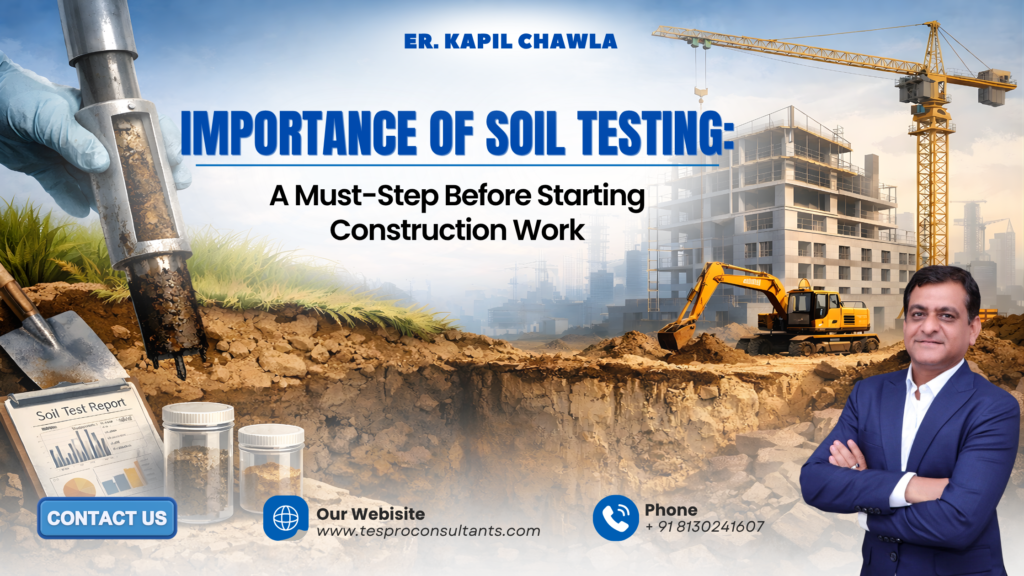
Before starting any project, it is very important to understand the ground conditions because the entire structure depends on them. The importance of soil testing lies in checking whether the soil can safely carry the load of a building or not. So, engineers first study the soil before any design work begins. Also, this step helps in avoiding future problems like cracks, settlement, or foundation failure. In simple words, without proper testing, construction becomes risky and uncertain. Moreover, every site has different soil behaviour, so one standard design cannot work everywhere. This is the importance of soil testing.
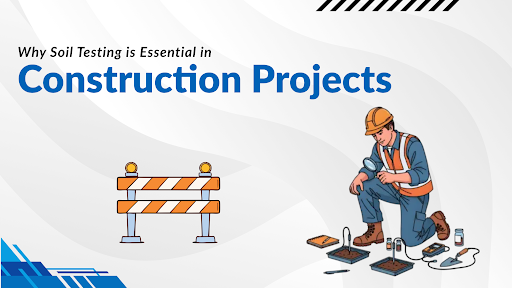
Why Soil Testing is Essential in Construction Projects
Soil testing plays an important part in ensuring not only the structural integrity of buildings and other structures, but also how much weight/load can be placed on those grounds safely. Furthermore, if a site has weak soil, provide additional design support so that the design does not fail. So, the role of soil testing for construction is very important.
Key points include:
- It checks soil strength and load-bearing capacity
- It identifies weak or unstable soil zones
- It helps in selecting a proper foundation design
- It reduces the risk of structural damage
- It ensures the long-term safety of the building
Therefore, proper testing is not optional but necessary. In addition, the importance of soil testing provides clear data to support safe engineering decisions. So, every project should start with soil analysis for better results.
Key Soil Properties Engineers Analyze
Engineers carefully study different soil features before designing because foundation safety depends on it. The focus on types of soil for foundation helps in selecting the correct construction method. Also, each soil type reacts differently under load, so proper classification is required.
| Soil Property | What It Means | Why It Matters |
| Bearing Capacity | Load soil can support | Prevents sinking |
| Moisture Content | Water in soil | Affects stability |
| Soil Density | Compactness of soil | Improves strength |
| Shear Strength | Resistance to sliding | Avoids collapse |
| Permeability | Water flow rate | Controls drainage |
Moreover, engineers also check compaction level and soil movement. However, if these properties are ignored, structural safety can be affected.
Types of Soil Tests Used in Construction Projects
Different tests are performed to understand soil behaviour properly, and this is known as types of soil testing. Also, each test gives specific data that helps in safe design planning. So, engineers choose tests based on project size and soil condition.
Common soil tests include:
- Standard Penetration Test (SPT) for strength checking
- Plate Load Test for bearing capacity
- Moisture Content Test for water level
- Atterberg Limits Test for soil plasticity
- Compaction Test for density and stability
Moreover, lab tests and field tests are often combined for better accuracy. However, skipping any important test can lead to wrong assumptions.
Expert Opinion on Soil Safety in Construction
According to experts, proper ground analysis is the basis of safe engineering design. The concept of soil for building construction is critical because even strong structures fail on weak soil. Also, engineers recommend testing before every major project because soil conditions can change from one site to another.
Risks of Ignoring Soil Investigation Before Building
Ignoring proper checks during soil testing for house construction can create serious structural problems later. Also, many failures in buildings happen because soil conditions were not studied properly in the beginning. So, understanding risks is very important before starting work.
Major risks include:
- Foundation settlement and uneven sinking
- Cracks in walls and floors
- Water drainage problems
- Weak structural stability
- High repair and maintenance costs
Moreover, poor soil knowledge can reduce building life. However, proper testing prevents all these issues easily. Therefore, engineers always recommend soil analysis before design approval.
TESPRO Consultants provides professional soil investigation services under the guidance of Er. Kapil Chawla and explain the importance of soil testing. With accurate testing methods and field expertise, he ensures safe foundation planning and strong construction outcomes for every project with precision and care.
Explore more: If planning to build your dream home?
Check out Eternal Foundations—a helpful guide to building a strong, safe home that lasts for generations. 📩 For a free e-book, email me at kapil.chawla@tesproconsultants.com