
Have you ever wondered how engineers check if a giant bridge or a tall building is safe without breaking it? Imagine if a doctor had to cut you open just to see if your bones were okay. That would hurt! Instead, doctors use X-rays to see inside your body. In the world of construction, we use something called types of NDT testing. These special tools allow us to look inside walls and floors using cool gadgets. Because of that, we can find tiny cracks or weak spots before they become big problems. If we didn’t have these tools, buildings might get old and shaky without anyone knowing.
Importance of NDT Testing in Concrete and Steel Structures
A structural assessment is like a health check-up for a big building. It is very important because of these reasons:
- Safety First: It keeps people safe from falling rocks or breaking floors.
- Saving Money: Fixing a small crack is much cheaper than building a new wall.
- Long Life: It helps bridges and stadiums last for a very long time.
- Quick Checks: Engineers can finish the job fast without making a big mess. Therefore, checking the “bones” of a structure helps everyone stay happy and safe while they work or play inside.
Common Types of NDT Testing for Concrete Structures
When we look at NDT in concrete, we use special tools to see what is happening deep inside the heavy gray blocks. Here are some ways we do it:
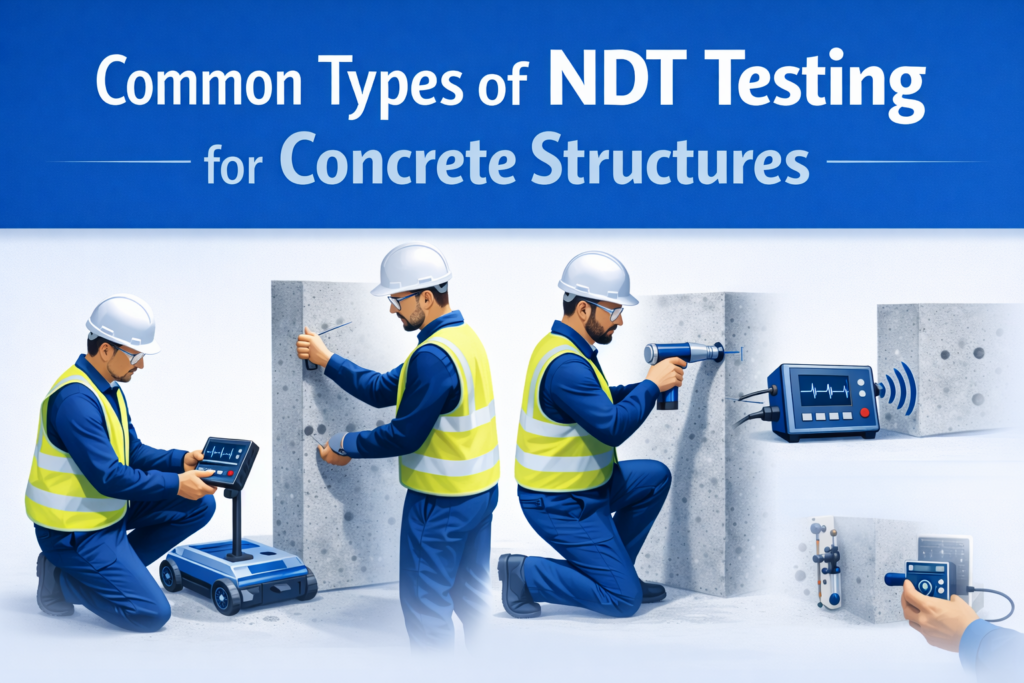
- Sound Waves: The upv test uses sound to see if there are any air bubbles or holes inside.
- Bounce Back: A rebound hammer hits the surface to see how hard and strong the concrete is.
- Rust Detection: We use half-cell potential to check if the metal bars inside are starting to rust.
- Chemical Check: A carbonation test tells us if the air is making the concrete weak over time. In addition, these tools help us “see” through solid stone just like we have superhero vision!
Common Types of NDT Testing for Steel Structures
Steel is very tough, but it can still get “sick” with rust or tiny breaks. Because steel is different from concrete, we use other types of NDT testing to make sure it stays strong.
- Magnet Power: We use magnets to find tiny cracks on the surface of the metal.
- Sound Echoes: High-pitched sounds can bounce off the back of a steel beam to find hidden spots.
- Liquid Clues: We spray a bright liquid on the steel to see if it leaks into any small cracks.
- X-ray Vision: Sometimes we use big cameras to take pictures of the inside of the steel. So, even though steel is super hard, we have ways to make sure it never fails under a heavy load or a big truck.
Comparison Table of NDT Methods
If you want to know which tool is best, you can look at this simple chart. It shows how we use a UPV test and other methods to keep things safe.
| Tool Name | Used On | What it Find |
| Rebound Hammer | Concrete | How hard the wall is |
| UPV Test | Concrete | Holes or cracks inside |
| Half-cell Potential | Steel inside Concrete | Rust on the metal bars |
| Carbonation Test | Concrete | Chemical changes from air |
Moreover, choosing the right tool for a structural assessment depends on whether we are looking at a sidewalk or a giant skyscraper!
FAQS
You might still be curious about the rebound hammer or how NDT in concrete works, so here are some common questions:
1. Does NDT testing hurt the building?
No, because these tests are “non-destructive,” which means they do not leave any marks or breaks. It is just like taking a picture or using a flashlight!
2. Can we use a carbonation test on a new house?
Yes, but it is usually for older buildings. This is because it takes a long time for the air to change the chemicals in the concrete and make it weak.
3. Why is half-cell potential so important for bridges?
If the metal bars inside a bridge rust, the whole bridge could get very weak. Therefore, we use this test to catch the rust before it spreads too far.
Need a professional structural assessment? TESPRO Consultants provides top-tier types of NDT testing to ensure your buildings
Explore more: If planning to build your dream home?
Check out Eternal Foundations—a helpful guide to building a strong, safe home that lasts for generations.📩 For a free e-book, email me at kapil.chawla@tesproconsultants.com